
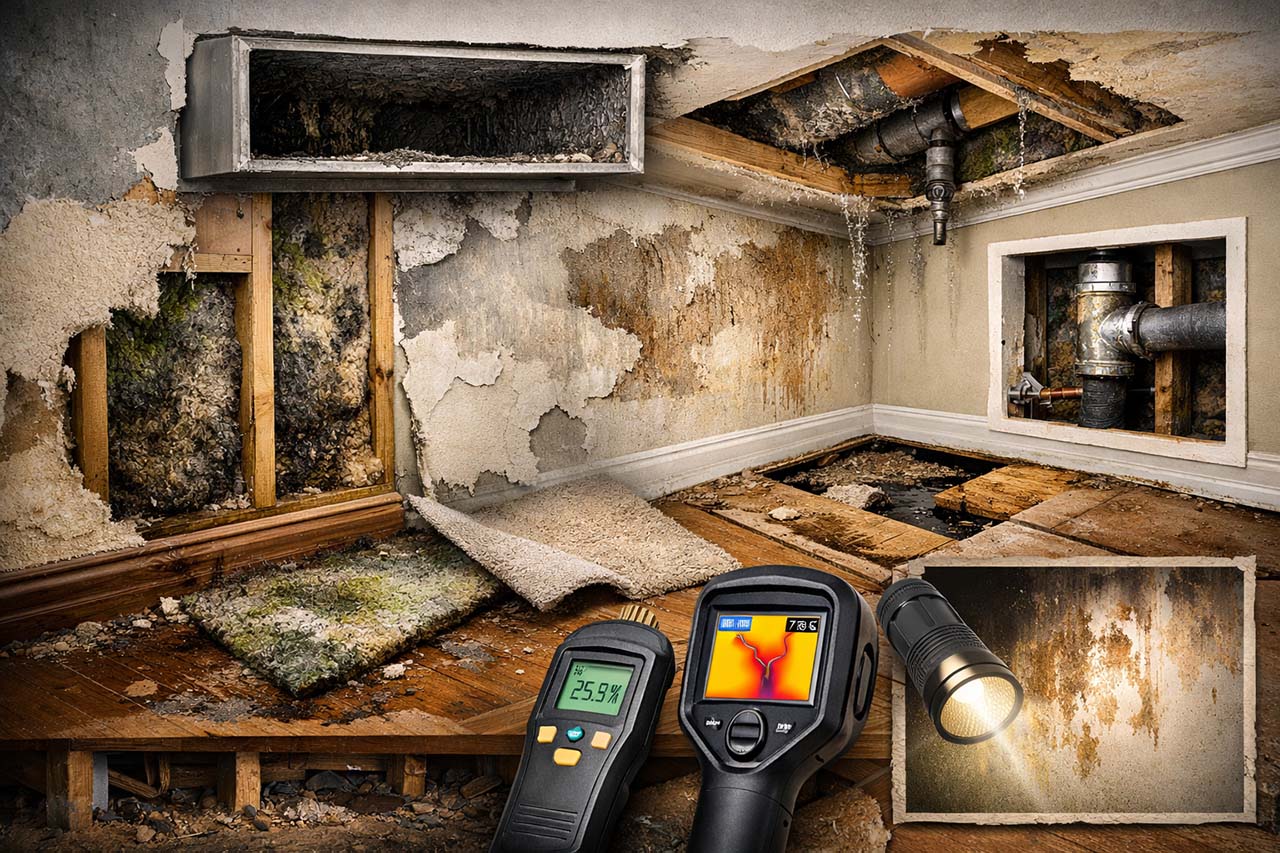
Yes, mold can absolutely be hidden from view, and in many homes and small businesses the most significant growth is out of sight – behind walls, under flooring, in ceilings, or inside HVAC systems. Detecting hidden mold means paying attention to moisture history, subtle visual clues, musty odors, health symptoms, and, when needed, using tools or professional inspections.
Where hidden mold likes to grow
Mold thrives where there is moisture, organic material, and limited air movement, which often describes concealed building cavities. Common hidden locations include:
-
The backside of drywall, wallpaper, and paneling, especially around plumbing or exterior walls
-
The underside of carpets and pads, and subflooring below bathrooms, kitchens, or entryways
-
Ceiling cavities above bathrooms, laundry rooms, and areas with roof leaks
-
Inside walls near leaking pipes, around windows, or where condensation forms
-
Inside ductwork and HVAC components where condensation or leaks occur
Guidance from building and environmental professionals also highlights basements, attics, and crawl spaces with poor ventilation as frequent hidden‑mold hot spots.
Early clues: visual and structural changes
Even when mold is out of sight, it often leaves visible or textural “footprints” on finished surfaces. Watch for:
-
Discoloration or staining: yellow, brown, or dark spots on walls, ceilings, or baseboards, especially near past water damage or leaks
-
Peeling, bubbling, or cracked paint and wallpaper: pressure from moisture behind the surface can cause finishes to lift or blister
-
Warped, soft, or bulging areas: drywall that feels spongy, bowed baseboards, or swollen trim can indicate ongoing moisture and likely mold behind
Regularly checking around windows, under sinks, behind furniture pushed against exterior walls, and near known leak points can reveal these subtle signs before damage becomes severe.
Using your senses: smell and symptoms
Your nose and body can be early warning tools for hidden mold. A persistent musty or earthy odor, especially in basements, closets, bathrooms, or after rain, often signals mold somewhere nearby, even when walls look clean. If a smell intensifies when doors or windows are closed, or when the HVAC system runs, it may be a clue that growth is in wall cavities, under flooring, or in ducts.
Unexplained or recurring health symptoms can also raise suspicion. Building and inspection sources note that increased allergies, sinus problems, coughing, or asthma symptoms that improve when you leave the building may be associated with hidden dampness and mold. While symptoms alone do not prove mold, they are a signal to look harder at moisture and building history.
Following the moisture trail
Moisture problems almost always come before mold, so tracking water is one of the most effective ways to find hidden growth. Focus on:
-
Past or current leaks: around roofs, windows, plumbing lines, water heaters, and appliances
-
Water stains and rings: on ceilings, around light fixtures, or at the tops and bottoms of walls
-
Condensation: frequent fogging on windows, sweating pipes, or damp spots on cold surfaces
If there has been any history of flooding, overflows, or long‑term humidity issues, areas that were wet and not dried within roughly 24–48 hours should be suspect for hidden mold behind the finished surfaces.
DIY tools and techniques to check for hidden mold
Homeowners and small business owners can use some non‑destructive methods to narrow down possible hidden mold areas before opening walls or calling a professional. Common techniques include:
-
Moisture meter: A handheld moisture meter can detect elevated moisture in drywall, wood, and other materials; unusually high readings compared to nearby “normal” areas suggest a hidden leak or damp cavity where mold may be growing.
-
Flashlight and close inspection: A bright flashlight held at an angle against walls and ceilings can reveal subtle texture changes, staining, or surface growth missed under normal lighting.
-
“Smell test” room‑by‑room: Closing doors and running the HVAC minimally for a period, then entering rooms individually, can help isolate which areas have the strongest musty odor.
-
Targeted checks: Lifting a corner of carpet near exterior doors or under a suspect area, removing easily accessible baseboards, or opening an access panel (like behind tubs or in utility closets) can expose hidden mold without major demolition.
Some sources mention black lights or other specialty tools, but moisture detection, visual clues, and odor are usually more reliable first‑line indicators for non‑professionals.
When to bring in a professional
There are clear situations where a professional mold inspector or remediation specialist is the most efficient and safest option. Consider expert help when:
-
You have strong musty odors or clear moisture history but no visible mold
-
Walls, ceilings, or floors show widespread staining, warping, or soft spots
-
Occupants have significant or worsening respiratory or allergy symptoms
-
You suspect mold in HVAC systems, large areas, or difficult‑to‑access spaces
Professionals use tools like advanced moisture meters, borescopes, and thermal imaging cameras to spot temperature and moisture anomalies behind surfaces without tearing everything open. They can then recommend targeted openings for confirmation and, if needed, design a remediation plan with proper containment and drying.
Practical steps if you suspect hidden mold
If you think mold may be hidden in your property, a structured approach helps you avoid both panic and neglect:
-
List moisture events and suspect areas: note past leaks, floods, or chronic humidity and where they occurred.
-
Inspect visually with good lighting: look for stains, peeling finishes, warping, or condensation in those zones.
-
Use simple tools: compare moisture levels with a meter in suspect vs. normal areas, and pay attention to where odors are strongest.
-
Avoid unnecessary demolition: start with the least destructive access points; over‑zealous tearing out can spread spores and increase costs.
-
Call a qualified professional if signs are strong, health is affected, or the area involved is more than a small, localized patch.
Hidden mold is common, but it is not unstoppable. By understanding where it hides, recognizing early warning signs, and using moisture‑focused detection methods, property owners can uncover problems earlier, limit damage, and plan effective remediation before a small hidden issue becomes a large and costly one.
 Welcome to the Melbourne Mold website. If you have any questions regarding mold at your home or business premises - we are here to help. Please call or complete the form to the right, and we will be in touch at the earliest opportunity.
~ Greg Bertaux