
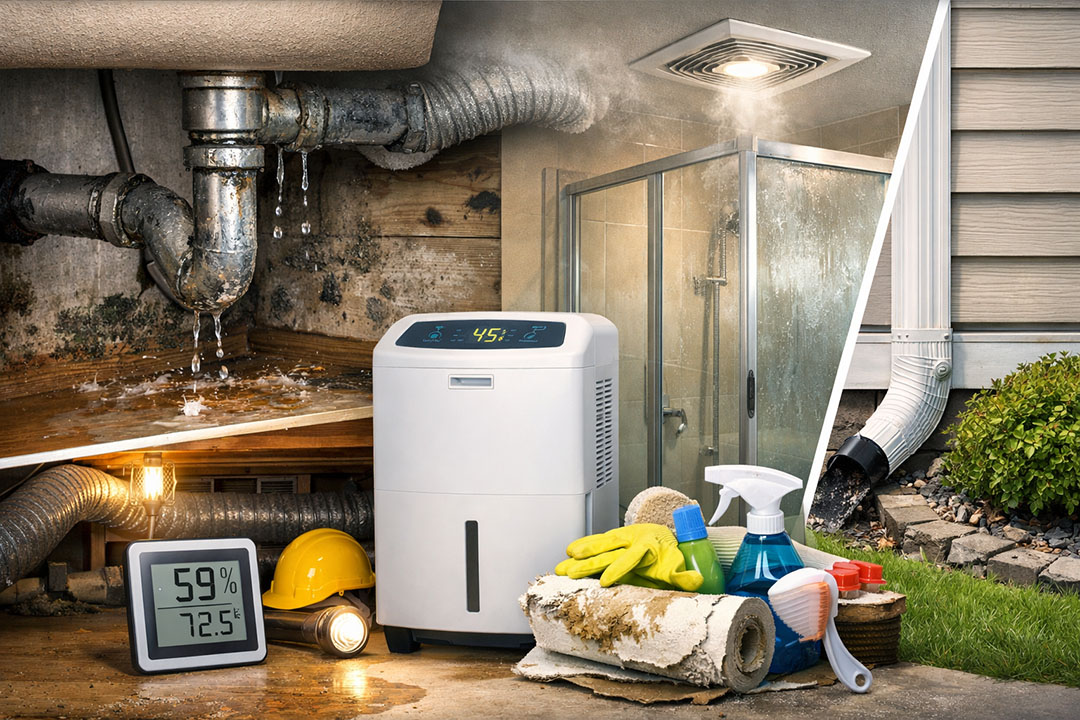
Mold comes back when the conditions that allowed it to grow in the first place never really changed. Keeping it from returning is less about the cleaning product you use and more about controlling moisture, humidity, and airflow over the long term.
Understand why mold keeps coming back
Mold spores are always present in indoor and outdoor air, so “killing all the mold” is not realistic. What you can control is whether your home provides the damp, stagnant conditions spores need to grow. Recurring mold almost always points to:
- Unresolved moisture sources such as leaks, condensation, or damp basements
- High indoor humidity, especially above about 60%
- Poor ventilation in bathrooms, kitchens, laundry rooms, and crawl spaces
- Incomplete cleanup, especially on porous materials where roots remain
If you wiped visible spots without fully drying materials or fixing the moisture problem, you only treated the symptom, not the cause, so the mold simply returns.
Make moisture control your top priority
Every major health and building agency repeats the same message: moisture control is the key to mold control. Practical moisture-control steps include:
- Dry wet materials quickly: Aim to dry any wet carpets, drywall, wood, or furnishings within 24–48 hours after leaks or spills.
- Fix leaks promptly: Repair roof leaks, plumbing drips, and window or flashing leaks as soon as they’re noticed, then verify surrounding materials are really dry, not just the surface.
- Improve drainage: Grade soil away from the foundation, keep gutters and downspouts clear, and route downspouts away from the house to reduce basement and crawl space dampness.
Without these steps, even a professional remediation can fail long term because the environment still favors mold.
Control indoor humidity day-to-day
Even without leaks, high humidity alone can keep surfaces damp enough for mold to regrow. To prevent this:
- Monitor humidity: Use an inexpensive hygrometer and aim to keep indoor relative humidity generally below 60%, with many experts suggesting 30–50% as a target range when possible.
- Use dehumidifiers: Run dehumidifiers in basements, crawl spaces, and other damp rooms, and empty/clean them regularly so they stay effective.
- Run air conditioning correctly: A well-sized AC on the proper settings can remove moisture from the air; using “auto” fan mode often dehumidifies better than constantly running the fan, which can re‑evaporate moisture.
In humid climates, like much of Florida and the Southeast, humidity control is especially critical for preventing recurring mold in closets, corners, and behind furniture.
Ventilate moisture at the source
A lot of moisture is generated inside the home through everyday activities, and if it is not vented out, it fuels mold growth and recurrence. Focus on:
- Bathrooms: Run exhaust fans while showering and for at least 20 minutes afterward, and make sure fans vent outdoors, not into the attic.
- Kitchens and laundry: Use range hoods that vent outside when cooking and always vent clothes dryers outdoors. Avoid drying clothes on racks in small, closed rooms.
- Whole-home airflow: Open interior doors, move furniture a few inches away from exterior walls, and periodically open windows when outdoor humidity is low to reduce stagnant, damp pockets of air.
Better ventilation reduces condensation and keeps surfaces drier, cutting off one of mold’s main requirements.
Address hidden and high‑risk areas
Recurring mold often traces back to hidden dampness rather than the spot you keep cleaning. Pay special attention to:
- Basements and crawl spaces: Ensure adequate ventilation, consider vapor barriers over exposed soil, and check around sump pumps and foundation walls for recurring dampness.
- Attics: Poor insulation and ventilation can cause condensation on roof framing, especially in cold weather; soffit and ridge vents, sealed ductwork, and controlling indoor humidity all help.
- Behind and under fixtures: Look under sinks, behind toilets, around tubs and showers, under washing machines, and near water heaters for slow leaks or repeated dampness.
If musty odors persist in an area even after cleaning, that often signals hidden moisture and potentially hidden mold that needs investigation, not just another wipe-down.
Clean correctly and choose the right materials
How you cleaned the original mold problem affects whether it returns. Research and remediation guidance emphasize:
- Remove, don’t just “kill”: Physically remove mold growth and any unsalvageable porous materials (like moldy drywall, ceiling tiles, and saturated carpet) rather than only spraying them.
- Avoid relying on bleach on porous materials: Bleach can leave underlying material damp and does not reliably penetrate to mold roots in porous surfaces, which can contribute to regrowth.
- Use mold‑resistant upgrades where feasible: In bathrooms, basements, and other damp‑prone areas, consider mold‑resistant drywall, paints labeled for high humidity, and hard-surface flooring instead of wall-to-wall carpet.
Proper cleaning combined with smarter material choices makes it harder for mold to re‑establish colonies in the same places.
Build a simple mold-prevention routine
Long-term success comes from habits, not one-time fixes. A practical prevention routine can include:
- Monthly: Check under sinks, around windows, and near appliances for new leaks, stains, or dampness; clean AC drip pans and ensure condensate drains are clear.
- Seasonally: Inspect your roof, gutters, downspouts, and foundation drainage; look in the attic and crawl space for new signs of moisture or mold.
- After any water event: Dry affected areas within 24–48 hours, monitor humidity, and consider professional help if materials stayed wet longer or the area is large.
By pairing good remediation with disciplined moisture, humidity, and ventilation control, you change the environment so mold no longer has what it needs to grow. That shift, not just stronger chemicals, is what truly prevents mold from returning.
 Welcome to the Melbourne Mold website. If you have any questions regarding mold at your home or business premises - we are here to help. Please call or complete the form to the right, and we will be in touch at the earliest opportunity.
~ Greg Bertaux