
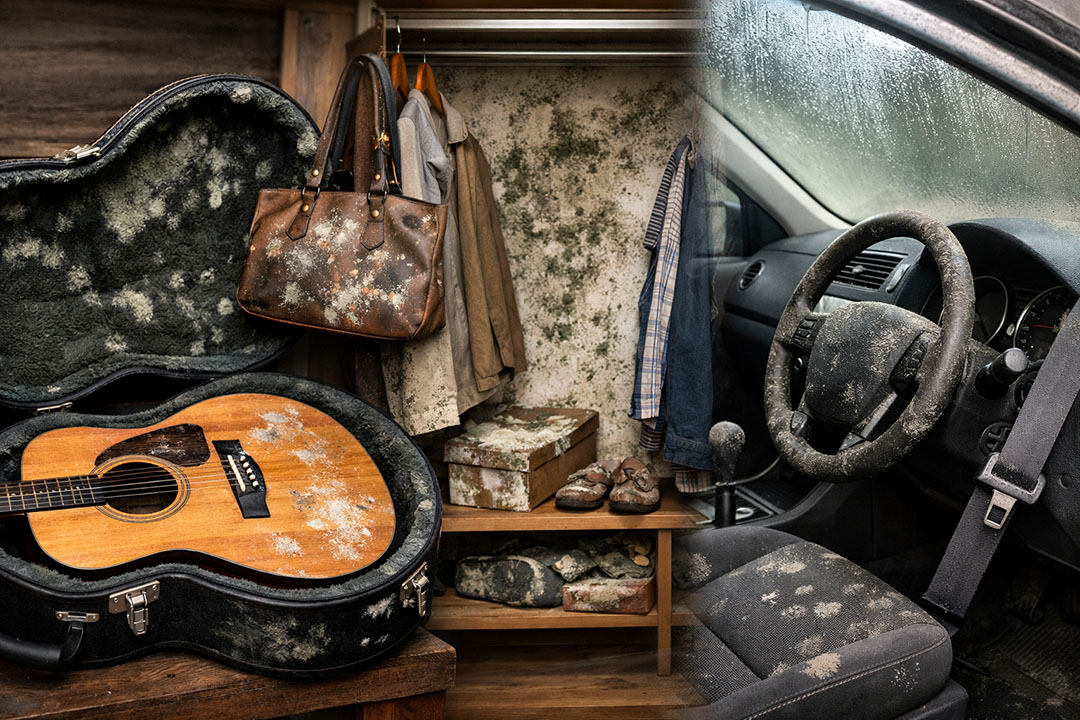
When people think of mold, they usually picture basements, bathrooms, or that one leaky corner in the ceiling. But some of the most troublesome mold problems hide in places you would never suspect: inside your favorite guitar, behind the clothes in a walk‑in closet, or inside the family car. These “micro‑environments” often check all the boxes mold needs to thrive: moisture, organic material, and stagnant air. Because they are small, closed spaces, problems can develop quickly and go unnoticed until they are expensive or impossible to fully reverse.
This article explores several unusual mold hotspots – musical instruments, closets, vehicles, and stored décor – why they are so vulnerable, and what you can do to protect them.
Why small, enclosed spaces are mold magnets
Mold doesn’t care how big a space is; it cares about conditions. Many hidden hotspots share three features:
- Limited airflow: Doors stay closed, vents are blocked, or containers are sealed.
- Intermittent moisture: Humid air, condensation, damp belongings, or wet clothing enter and then stay trapped.
- Organic surfaces: Wood, fabric, leather, paper, cardboard, and dust provide food.
In a large room, small moisture events may dry quickly. In a violin case, a walk‑in closet corner, or the trunk of a car, the same amount of moisture may linger long enough for mold to flourish. Because these spaces are used irregularly, you may only open them once a week—or once a season—and be greeted by a musty surprise.
Musical instruments: Fine wood, fine mold
Stringed instruments, pianos, and woodwinds are built from carefully selected woods, glues, felt, leather, and other organic materials. They are also sensitive to humidity for reasons of tone and structural stability. That makes them ideal targets for mold in the wrong conditions.
How mold gets a foothold
Common pathways include:
- Storing instruments in damp basements, garages, or against exterior walls.
- Leaving cases on cool floors in humid rooms, where condensation can form.
- Playing outdoors or transporting instruments in humid weather, then sealing them in their cases before they have dried.
Once moisture is trapped, mold can grow on:
- Wood surfaces and unfinished interior cavities.
- Felt hammers and key bushings in pianos.
- Case linings, straps, and padding.
Instruments with complex interiors, like pianos and some wind instruments, may harbor mold where you can’t easily see it. Over time, this can contribute to musty odors, degraded materials, sticking keys, and even respiratory irritation for sensitive players.
Prevention tips for instruments
- Store in conditioned spaces: Keep instruments in rooms with stable temperature and controlled humidity (often around 40–50%, depending on the instrument).
- Avoid floor‑level storage: Use stands, wall mounts, or shelves to keep cases off cold floors and away from exterior walls.
- Air out after use: After playing in a humid environment, leave cases open in a dry room for a few hours so instruments and linings can release moisture.
- Use desiccants or humidity control packs: Choose products designed for musical instruments; replace them as directed.
If you notice musty odors, visible spots, or corrosion on hardware, a professional who understands both instrument care and mold may be needed. General household cleaners can permanently damage delicate finishes and materials.
Closets: The hidden climate behind your clothes
Closets feel safe and protected, yet they are often some of the most stagnant and humid spaces in a home. Walk‑in closets along exterior walls are especially risky, because cool wall surfaces meet warm, moist indoor air.
Why closets are vulnerable
- Restricted airflow: Doors stay closed, and supply or return vents may be blocked by shelving or clothing.
- Exterior wall contact: Shoes, boxes, or furniture pushed against cold walls can trap moisture.
- Moisture brought in with items: Slightly damp clothing, gym bags, coats, and shoes add moisture to a small, enclosed volume of air.
Early signs include:
- Musty smell when you open the closet door.
- Leather goods becoming tacky or spotted.
- Light mold growth on belts, purses, or the edges of shelves.
Because closets are packed, you may not see what’s happening on the wall behind a hanging garment until growth is advanced.
Prevention tips for closets
- Improve airflow: Keep doors open periodically, avoid blocking vents, and consider louvered doors or small passive grilles where appropriate.
- Create space from exterior walls: Leave a small gap between belongings and outside walls; avoid pressing furniture tightly against those surfaces.
- Never store damp items: Let workout clothes, coats, and shoes dry fully before putting them away.
- Monitor humidity: In damp regions or seasons, a small, safe dehumidifier or moisture‑absorbing product inside or near problem closets can help.
If you suspect hidden mold, a professional moisture check of the adjoining walls and ceiling can reveal whether there’s a deeper issue like an exterior leak or condensation inside the wall cavity.
Cars and RVs: Mobile micro‑climates
Vehicles and recreational vehicles are essentially small buildings: enclosed, often tightly sealed, full of fabric, foam, and carpeting. They are exposed to wide swings in temperature and humidity, and they are particularly prone to leaks around windows, doors, and roof seams.
How vehicles become moldy
- Window or sunroof leaks that drip into hidden channels, door panels, or headliners.
- Blocked AC drain lines that let condensate overflow into the cabin.
- Wet floor mats or seats from rain, snow, spills, or beach trips left to dry in a sealed vehicle.
- Long periods of disuse, especially in outdoor storage with fluctuating temperatures.
Symptoms include:
- Persistent musty or “old car” smell, especially after the vehicle has been closed up.
- Foggy windows from trapped moisture.
- Visible mold on seat belts, fabric seats, or interior trim.
Left unchecked, mold can penetrate padding and underlayments, making complete removal difficult without significant disassembly.
Prevention tips for cars and RVs
- Deal with water quickly: Remove soaked mats, blot seats, and run the AC on a dry setting or use a portable fan and dehumidifier in a garage.
- Check for leaks: Inspect door seals, sunroofs, and AC drain lines if you notice recurring dampness.
- Vent during storage: When secure and safe, allow for some air exchange. In humid climates, indoor storage with humidity control is ideal.
- Avoid long‑term storage with wet gear: Dry beach towels, wetsuits, and sports equipment before placing them back in the vehicle.
For RVs, routine roof inspections, seam maintenance, and under‑bed/under‑bench checks are critical, as slow leaks can wet structural elements and built‑in storage with little outward sign until damage is extensive.
Stored décor and seasonal items: Mold time capsules
Holiday decorations, extra linens, and seasonal clothing are often stored in attics, garages, basements, or sheds. These spaces see larger temperature and humidity swings and may not be part of the conditioned envelope of the home.
Common scenarios
- Cardboard boxes on concrete slabs wick moisture from the floor, creating damp micro‑habitats.
- Attic storage experiences hot, humid air in summer and cooler temperatures later, pumping moisture in and out of materials.
- Decorations or textiles are boxed up slightly damp after a holiday season and sealed for months.
When you reopen boxes, you may find:
- Musty smells that transfer to the rest of the home.
- Visible mold on fabrics, paper, and cardboard.
- Fragile items like wreaths and ornaments shedding spores and dust.
Prevention tips for stored items
- Choose containers wisely: Use sealed plastic bins instead of cardboard in damp or unconditioned areas.
- Elevate storage: Keep bins off concrete floors using shelves or pallets.
- Dry before you store: Ensure all fabrics, decorations, and artificial greenery are fully dry before boxing.
- Inspect periodically: Don’t let items sit untouched for years; check high‑value or sentimental belongings at least annually.
If you discover moldy stored items, it’s often best to discard heavily affected porous items rather than trying to salvage everything. Cleaning can aerosolize spores and spread contamination to cleaner parts of the home.
Turning attention to the “little” spaces
The recurring theme with these unusual hotspots is that they don’t look like dramatic water‑damage zones. They are small, ordinary spaces people use every day: the place where you keep your favorite coat, the car you drive your kids in, the instrument your child practices on, the boxes of memories in the attic.
By paying attention to smells, condensation, and early surface changes in these spaces, and by managing humidity, airflow, and storage habits, you can often prevent mold issues long before they require professional intervention. Early, simple actions like airing out instrument cases, cracking closet doors, drying car interiors promptly, and upgrading storage containers are inexpensive compared to the cost of replacing a piano action, remediating an RV, or throwing away a closet full of belongings.
In mold prevention, big wins often come from noticing the small, easily overlooked environments. If you care for the micro‑climates inside your instruments, closets, cars, and storage spaces, you drastically reduce the chances of surprising, and costly, mold discoveries later.
 Welcome to the Melbourne Mold website. If you have any questions regarding mold at your home or business premises - we are here to help. Please call or complete the form to the right, and we will be in touch at the earliest opportunity.
~ Greg Bertaux