
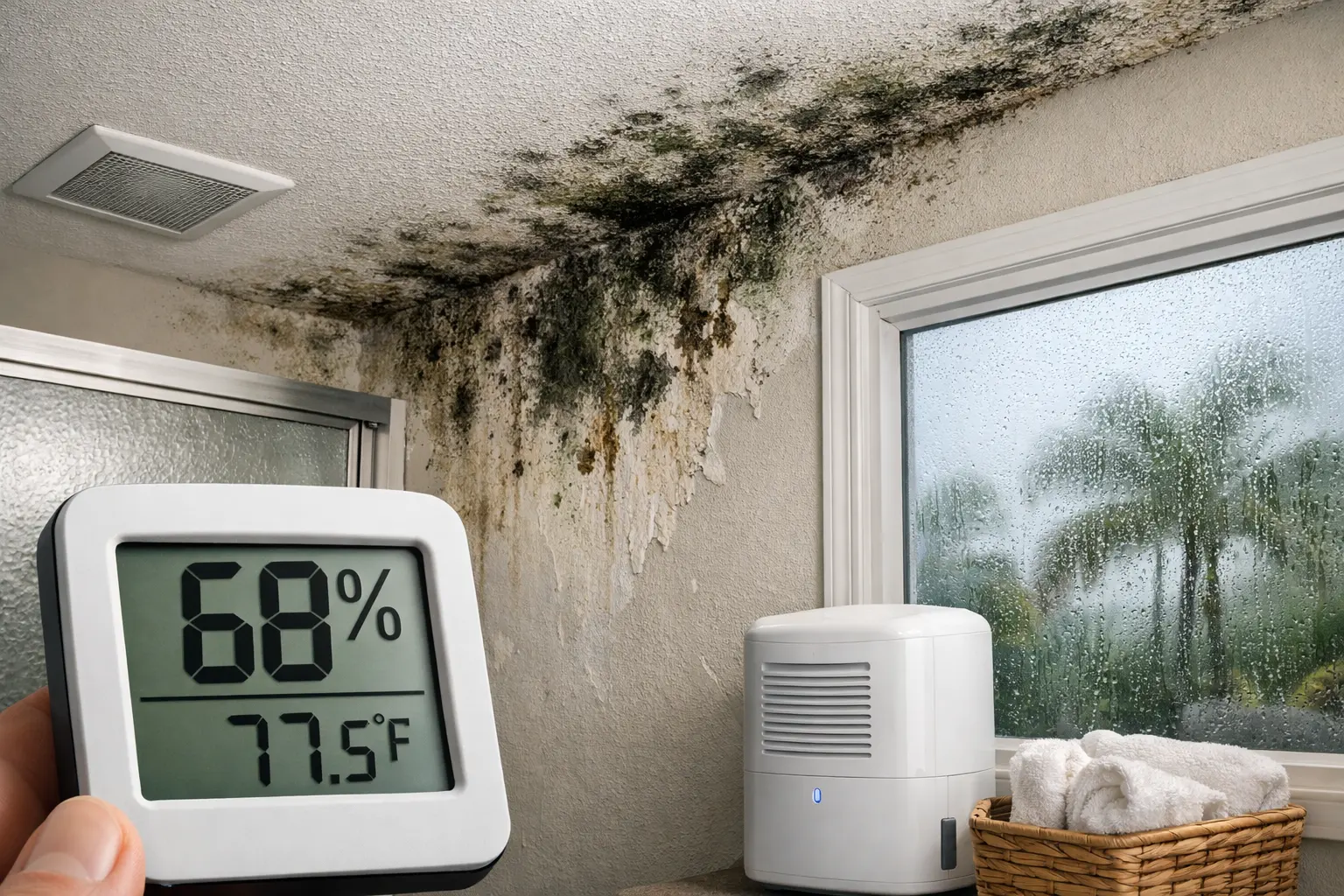
Living in Florida has many advantages: warm weather, coastal breezes, and beautiful outdoor living. However, the same climate that makes the Space Coast attractive also creates ideal conditions for mold growth inside homes. At Melbourne Mold, one of the most common questions we hear from homeowners is: “How does humidity actually affect mold growth?”
The short answer is simple. Humidity is one of the primary drivers of mold growth indoors. When moisture levels rise, mold spores can quickly settle, grow, and spread throughout a home.
Understanding how humidity contributes to mold can help homeowners prevent problems before they become costly or hazardous.
Why Humidity Matters for Mold Growth
Mold is a naturally occurring fungus that exists almost everywhere. Tiny mold spores float through the air both indoors and outdoors. Under normal conditions, these spores remain dormant.
However, mold only needs three basic things to begin growing:
- Moisture
- Organic material (wood, drywall, dust, fabric, etc.)
- Warm temperatures
Florida homes provide plenty of warm temperatures and building materials mold can feed on. Humidity supplies the missing ingredient: moisture.
When indoor humidity levels climb high enough, moisture begins accumulating on surfaces such as walls, ceilings, furniture, and inside HVAC systems. Once this happens, mold spores can begin colonizing within 24 to 48 hours.
This is why homes in humid climates like Brevard County are particularly vulnerable to mold issues.
What Humidity Level Allows Mold to Grow?
Humidity is typically measured as relative humidity (RH), which refers to the amount of moisture in the air compared to the maximum amount the air can hold at a given temperature.
Indoor humidity levels fall into several categories:
- 30–50% RH: Ideal range for indoor air quality
- 50–60% RH: Elevated humidity that may support mold growth
- 60%+ RH: High risk for mold development
Most mold species begin thriving when indoor humidity rises above 60 percent.
In Florida homes without proper climate control, humidity levels can easily exceed this threshold, particularly during the summer months when outdoor humidity frequently reaches 80 to 100 percent.
Common Areas Where Humidity Causes Mold
Humidity does not affect every area of the home equally. Certain spaces are far more likely to develop mold due to poor ventilation or hidden moisture.
Bathrooms
Hot showers release large amounts of water vapor into the air. Without proper ventilation fans or airflow, humidity can linger long enough to allow mold growth on:
- Ceilings
- Tile grout
- Drywall
- Cabinets
Kitchens
Cooking and dishwashing generate steam that increases humidity. Mold may develop behind appliances, under sinks, or inside cabinetry.
Laundry Rooms
Dryers produce moisture that can accumulate if vents are blocked or improperly installed.
Closets and Storage Areas
Closets with limited airflow often trap humidity. Mold may appear on clothing, shoes, cardboard boxes, or drywall.
HVAC Systems
Air conditioning systems remove moisture from indoor air. However, clogged drain lines, dirty coils, or poorly maintained systems can create moisture buildup inside ductwork.
This can lead to mold contamination that spreads throughout the home via the ventilation system.
How Florida’s Climate Makes Mold More Likely
Homeowners in the Melbourne area face unique environmental challenges.
Coastal Florida experiences:
- High year-round humidity
- Frequent rainstorms
- Tropical weather systems
- Warm temperatures throughout most of the year
Even well-maintained homes can experience humidity infiltration when outside air enters through:
- Attic spaces
- Crawlspaces
- Poorly sealed windows and doors
- Air leaks in duct systems
Additionally, homes that remain closed for long periods, such as seasonal residences or vacation properties, may develop humidity buildup if air conditioning is not maintained properly.
Signs Humidity May Be Causing Mold in Your Home
Humidity-related mold often begins in hidden locations before becoming visible. Homeowners should watch for early warning signs such as:
- Musty or earthy odors
- Condensation on windows or walls
- Peeling paint or bubbling drywall
- Dark spots on ceilings or corners of rooms
- Increased allergy symptoms indoors
These indicators may suggest that humidity levels inside the home are creating conditions suitable for mold growth.
When these signs appear, professional mold inspection can determine whether mold is present and identify the moisture source.
How Homeowners Can Control Indoor Humidity
The most effective way to prevent mold growth is controlling indoor humidity levels.
Here are several steps homeowners can take to reduce moisture inside the home.
Maintain Your Air Conditioning System
In Florida homes, the AC system acts as the primary humidity control system. Regular maintenance helps ensure it removes moisture efficiently.
Key maintenance steps include:
- Cleaning evaporator coils
- Clearing condensate drain lines
- Replacing air filters regularly
Use Exhaust Fans
Bathroom and kitchen fans remove humid air from the home. Running these fans during showers and cooking can significantly reduce moisture buildup.
Monitor Humidity Levels
A small digital hygrometer can measure indoor humidity levels. These devices are inexpensive and can help homeowners ensure humidity remains below 55 percent.
Consider a Dehumidifier
In homes that struggle with persistent humidity, a portable or whole-home dehumidifier may help maintain safe moisture levels.
Address Water Leaks Quickly
Plumbing leaks, roof leaks, and water intrusion create additional moisture that can rapidly lead to mold growth.
Prompt repairs are essential for preventing long-term contamination.
Why Professional Mold Testing Matters
Humidity problems can allow mold to develop in places homeowners cannot easily see, such as:
- Inside walls
- Under flooring
- In attic insulation
- Inside HVAC ductwork
Professional mold inspection and testing can identify these hidden issues before they worsen.
At Melbourne Mold, our inspections help homeowners determine:
- Whether mold is present
- Where moisture is entering the home
- Whether indoor air quality has been affected
- What steps are needed to correct the issue
As an independent mold inspection company, we focus strictly on testing and assessment, allowing homeowners to make informed decisions about remediation if needed.
Protect Your Home from Mold
Humidity is one of the most powerful factors driving mold growth in Florida homes. When indoor moisture levels climb too high, mold can begin spreading quickly, often before homeowners realize there is a problem.
By monitoring humidity, maintaining HVAC systems, and addressing moisture issues early, homeowners can greatly reduce their risk of mold contamination.
However, if you suspect mold may already be present, professional testing can provide clarity.
Melbourne Mold provides comprehensive mold inspections and testing for homeowners throughout Melbourne, Palm Bay, Viera, Satellite Beach, Indialantic, and surrounding areas.
📞 Call 321-574-5503 today to schedule a professional mold inspection and protect your home’s indoor air quality.
 Welcome to the Melbourne Mold website. If you have any questions regarding mold at your home or business premises - we are here to help. Please call or complete the form to the right, and we will be in touch at the earliest opportunity.
~ Greg Bertaux