
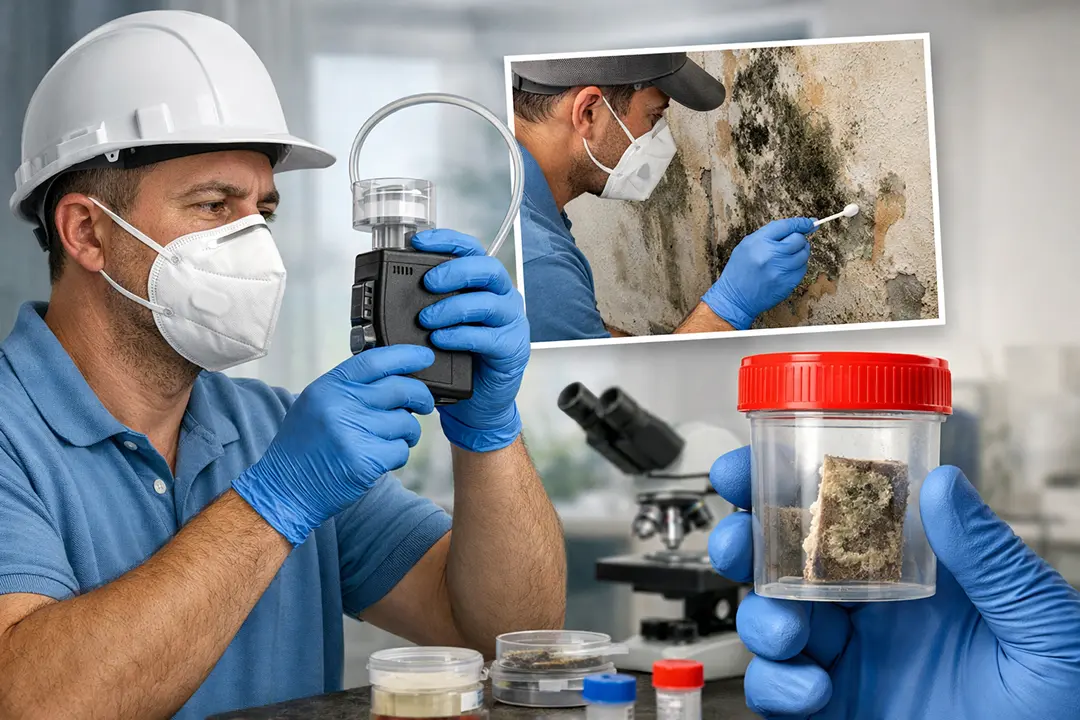
How Is Mold Testing Performed (Air, Surface, or Bulk Sampling)?
In Florida’s humid climate, mold problems are a common concern for both homeowners and business owners. Moisture from heavy rainfall, plumbing leaks, HVAC condensation, or high indoor humidity can create ideal conditions for mold growth. Unfortunately, mold is not always visible. It can grow behind walls, inside air ducts, under flooring, or in other hidden areas.
This is where professional mold testing becomes essential.
At Melbourne Mold, a licensed mold inspection company based in Melbourne, Florida, we specialize in identifying mold problems through professional inspection and laboratory testing. Understanding how mold testing works can help property owners make informed decisions when dealing with suspected mold issues.
In this guide, we explain the three primary methods used during professional mold inspections: air sampling, surface sampling, and bulk sampling.
Why Professional Mold Testing Is Important
Many people assume that if mold is visible, testing is unnecessary. While that may be true in some cases, professional testing provides critical information that visual inspections alone cannot provide.
Mold testing can help determine:
- Whether mold spores are elevated in the indoor air
- The type of mold present
- Whether hidden mold growth may exist in walls, ceilings, or HVAC systems
- Whether indoor air quality may be affecting occupants
- The extent of contamination within a property
Testing is especially valuable during:
- Real estate transactions
- Tenant or employee health complaints
- Suspected hidden mold growth
- Post-remediation verification
- Insurance or legal documentation
By using laboratory analysis, mold testing provides objective data rather than assumptions.
Air Sampling: Testing Mold Spores in Indoor Air
Air sampling is one of the most commonly used methods in professional mold inspections.
Because mold reproduces by releasing microscopic spores into the air, elevated levels of spores indoors can indicate mold growth somewhere within the structure.
How Air Sampling Works
During air sampling, a calibrated pump pulls a specific volume of air through a specialized spore trap cassette. The cassette captures airborne particles, including mold spores.
The typical process includes:
Outdoor Control Sample
An outdoor air sample is taken first to establish a baseline level of naturally occurring mold spores in the environment.
Indoor Air Samples
Samples are then taken in areas such as:
- Living spaces
- Bedrooms
- Offices or commercial areas
- Near HVAC vents
- Areas where mold is suspected
Laboratory Analysis
The samples are sent to an accredited microbiology laboratory. Technicians identify and count the spores present in the samples.
The results typically identify common mold types such as:
- Aspergillus
- Penicillium
- Cladosporium
- Stachybotrys (often referred to as black mold)
An inspector compares indoor spore levels to outdoor levels to determine whether abnormal indoor mold conditions exist.
Air sampling is particularly useful when mold is suspected in hidden areas such as wall cavities or HVAC systems.
Surface Sampling: Testing Visible Mold Growth
When mold-like staining is visible, inspectors may use surface sampling to confirm exactly what it is.
Not every dark or discolored spot is mold. Surface testing allows laboratories to confirm whether microbial growth is present.
Common Surface Testing Methods
Tape Lift Sampling
Tape lift sampling involves pressing specialized adhesive tape onto the suspected surface. The tape collects microscopic particles that are later analyzed under a microscope.
This method is commonly used on:
- Drywall
- Wood
- Tile
- HVAC vents
- Painted surfaces
Swab Sampling
A sterile swab is rubbed across the surface to collect material for laboratory analysis.
Swabs are often used on irregular surfaces such as:
- Textured drywall
- Furniture
- Duct interiors
- Concrete
Surface sampling allows laboratories to identify the specific mold species growing on the material.
Bulk Sampling: Testing Pieces of Building Material
Bulk sampling involves removing a small piece of material from the affected area.
Examples include:
- Drywall sections
- Insulation
- Carpet fibers
- Ceiling tile
- Wood fragments
The sample is sealed in a sterile container and sent to a laboratory for analysis.
Bulk sampling may be recommended when:
- Mold is embedded within porous materials
- Visible contamination needs laboratory confirmation
- Documentation is needed for legal or insurance purposes
Although less common than air or surface testing, bulk samples provide direct evidence of mold colonization within materials.
Mold Testing Is Only One Part of a Professional Inspection
While air, surface, and bulk samples provide valuable information, a professional mold inspection involves much more than simply collecting samples.
At Melbourne Mold, inspections often include:
- Moisture meter testing
- Thermal imaging to locate hidden moisture sources
- HVAC system evaluation
- Visual inspection of mold-prone areas
- Indoor air quality evaluation
Sampling is used strategically to confirm findings and provide laboratory documentation.
Why Hiring an Independent Mold Inspector Matters in Florida
Florida law separates mold assessment and mold remediation to prevent conflicts of interest.
This means the company performing the initial mold inspection and testing cannot perform the remediation work on the same property.
Working with an independent mold inspection company like Melbourne Mold offers several advantages:
- Objective testing results
- No financial incentive to exaggerate mold problems
- Licensed mold assessors following Florida regulations
- Clear inspection reports with laboratory documentation
Because we focus strictly on mold inspection and testing, our recommendations are based entirely on the findings of the inspection.
Professional Mold Testing in Melbourne, FL
If you suspect mold in your home, rental property, or commercial building, professional testing can provide the answers you need.
Melbourne Mold provides licensed mold inspections and testing throughout:
- Melbourne
- Palm Bay
- Viera
- Satellite Beach
- Indialantic
- Melbourne Beach
- Vero Beach
Our inspections identify hidden mold problems, evaluate indoor air quality, and provide detailed laboratory-backed reports.
Call for a Mold Inspection Today
If you notice musty odors, water damage, or visible mold growth, it is best to investigate early before the problem spreads.
Call Melbourne Mold today at 1-321-574-5503 to schedule a professional mold inspection.
Early testing can prevent small moisture problems from becoming major structural or health concerns.
FAQ Section
What is the most common type of mold test?
Air sampling is the most commonly used mold test because it measures airborne spores and can detect hidden mold growth.
How long does mold testing take?
A professional mold inspection typically takes one to two hours depending on property size. Laboratory results are usually available within several days.
Can mold testing detect hidden mold?
Yes. Elevated airborne spores detected through air sampling often indicate hidden mold growth behind walls, ceilings, or HVAC systems.
Is mold testing necessary when buying a home?
Yes. Mold inspections can identify moisture problems and contamination that may not be visible during a standard home inspection.
Is mold testing expensive?
The cost depends on the size of the property and number of samples taken, but testing is often far less expensive than repairing widespread mold damage.
 Welcome to the Melbourne Mold website. If you have any questions regarding mold at your home or business premises - we are here to help. Please call or complete the form to the right, and we will be in touch at the earliest opportunity.
~ Greg Bertaux