
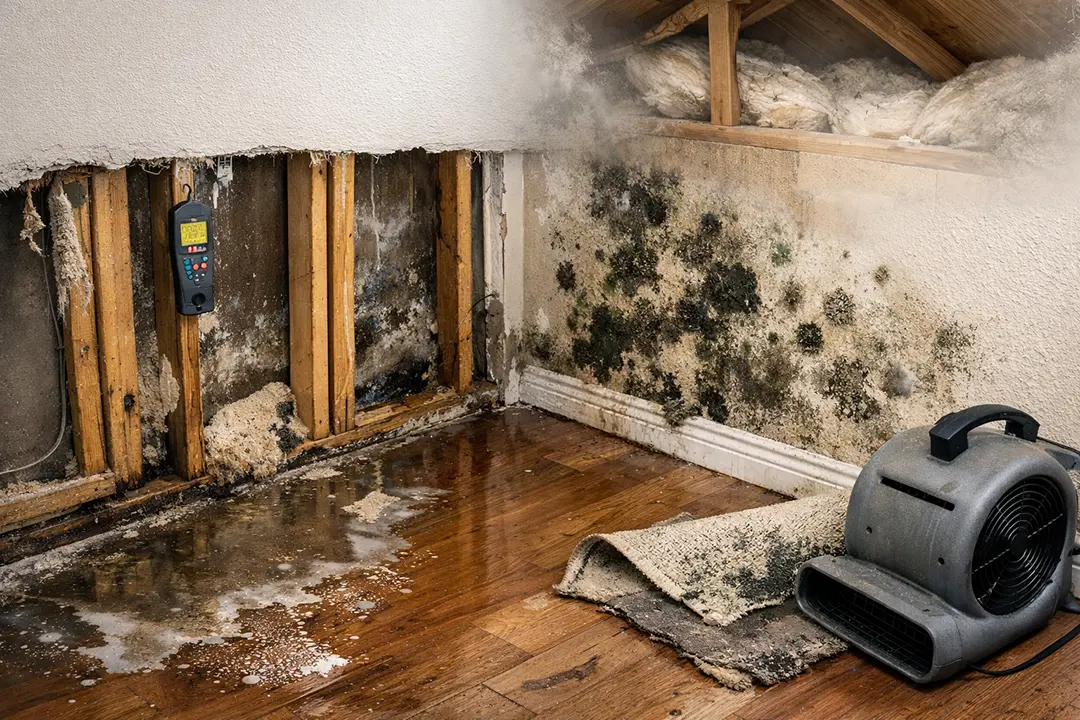
If you’ve had a leak, flood, roof issue, or condensation problem in your South Florida home, one of the first questions that comes to mind is simple: if the moisture is gone, is the mold gone too? The short answer is no, not always. Removing the source of dampness usually stops mold from actively growing, but it does not necessarily eliminate it from the home.
At Melbourne Mold, we help homeowners understand that mold is really a moisture problem first. If the water source is fixed, that is a major step in the right direction. But mold spores, dormant growth, and hidden contamination can still remain in materials long after the visible water has dried.
Mold Needs Moisture to Grow
Mold cannot thrive without moisture. That is why leaks, flooding, high indoor humidity, and condensation create the perfect conditions for growth. In many cases, mold can begin developing within 24 to 48 hours after water intrusion if the affected area is not dried quickly and properly.
That matters even more here in South Florida, where heat and humidity can keep indoor spaces damp for long periods of time. A home may look dry on the surface while moisture is still trapped behind drywall, under flooring, inside cabinets, or around windows.
What Happens When Moisture Is Removed?
When the dampness is removed, active mold growth usually slows down or stops. That sounds like good news, and it is. But “stopped growing” does not mean “gone.”
Mold can remain dormant on surfaces or inside porous materials. Think of it like a seed waiting for the right conditions. If moisture returns, the mold can become active again and continue spreading. That is why a leak repair alone does not always solve the problem.
If the affected area was not dried thoroughly, cleaned properly, or removed when necessary, mold can stay behind and create future issues. This is especially true in South Florida homes, where high humidity can make it difficult for materials to fully dry out.
Why South Florida Homes Are at Higher Risk
South Florida homes face a unique combination of challenges. We deal with tropical humidity, heavy rain, storm damage, and strong air-conditioning cycles that can create condensation inside the home. Even a small plumbing leak or AC issue can lead to mold growth if it is not addressed quickly.
The problem is that mold often grows in hidden places. Homeowners may fix the visible leak but miss the moisture trapped inside the wall cavity or under the flooring. Later, they notice a musty smell, staining, or recurring spots and assume the problem has returned when in reality, it may never have been fully eliminated.
Signs Mold May Still Be Present
If your dampness problem was repaired but you still notice any of the following, mold may still be living on in the home:
- A persistent musty odor.
- Discoloration on walls, ceilings, or baseboards.
- Soft, warped, or bubbling materials.
- Allergy-like symptoms that improve when you leave the house.
- Recurring spots in the same area after cleaning.
These signs often point to hidden moisture or lingering contamination. In other words, the mold may no longer be feeding on active water intrusion, but it may still be present in the structure.
Why Drying Alone Is Not Always Enough
It is tempting to think that once the wet spot disappears, the problem is solved. Unfortunately, that is not always the case. Some building materials absorb moisture deeply and do not dry well on their own. Drywall, insulation, carpet, padding, and wood framing can all hold onto moisture long after the leak is repaired.
If those materials stay damp too long, mold growth can continue out of sight. Even if the surface looks dry, the inside of the material may still be wet enough to support mold. That is why professional assessment is so important after any significant water event.
When Mold Remediation Is Needed
If mold is present, remediation may be necessary. That could include cleaning, drying, or removing affected materials depending on the extent of the problem. The most important step is making sure the moisture source has been fixed first. Without that, mold will likely come back.
At Melbourne Mold, we always encourage homeowners to think beyond the visible stain. The real question is whether the area is truly dry, whether hidden materials were affected, and whether the conditions that allowed mold growth in the first place have been corrected.
How Homeowners Can Help Prevent Mold From Returning
Here are a few practical steps South Florida homeowners can take:
- Fix leaks as soon as they are discovered.
- Use exhaust fans in bathrooms and kitchens.
- Keep indoor humidity as low as possible.
- Run dehumidifiers in especially damp areas.
- Have HVAC systems inspected regularly.
- Dry wet materials within 24 to 48 hours whenever possible.
Prevention is especially important in our climate because even small amounts of lingering moisture can keep mold problems alive.
The Bottom Line
If the source of dampness is removed, mold usually stops actively growing but that does not mean it is gone for good. Mold can remain dormant, hidden, or trapped in building materials until moisture returns. For South Florida homeowners, that means the safest approach is to fix the moisture problem, inspect the affected area carefully, and confirm that the home is truly dry.
At Melbourne Mold, we believe peace of mind starts with knowing what is happening behind the walls, not just what you can see on the surface.
 Welcome to the Melbourne Mold website. If you have any questions regarding mold at your home or business premises - we are here to help. Please call or complete the form to the right, and we will be in touch at the earliest opportunity.
~ Greg Bertaux