
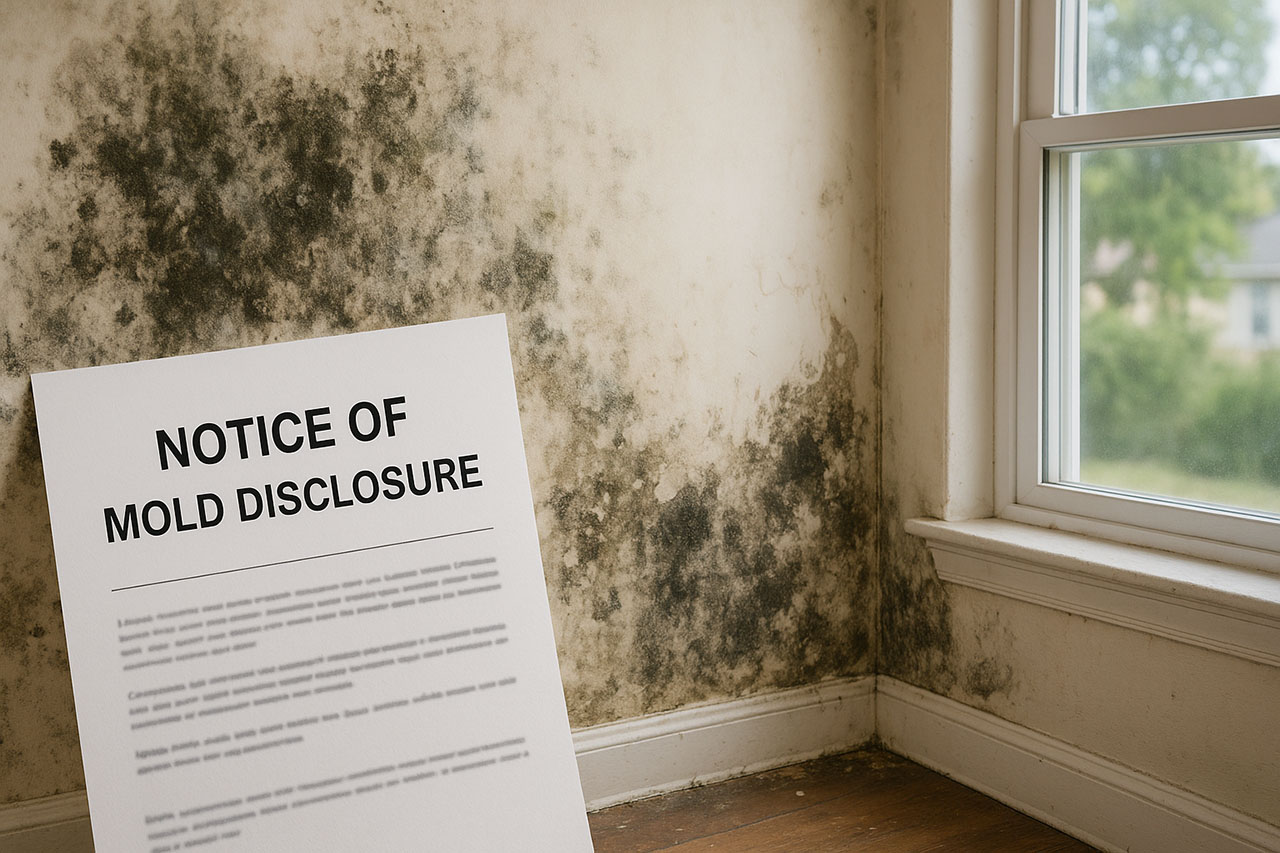
Mold should almost always be disclosed during property transactions, both because many states require disclosure of known mold and water issues, and because failing to disclose can expose sellers and agents to serious legal and financial liability later. Buyers, in turn, should expect clear, written information about any past or present mold problems when evaluating a property.
Why mold matters in a sale
Mold is more than a cosmetic issue; it often signals underlying moisture problems that can damage building materials and affect indoor air quality. Significant mold or chronic moisture can change a buyer’s perception of value, future repair costs, and even their willingness to move forward with the purchase, which makes it a “material” condition in most real estate contexts.
From a risk perspective, a seller who hides or downplays mold might close a deal in the short term but risks disputes, repairs, and lawsuits if the buyer later discovers the problem and can show the seller knew or should have known about it.
Legal basics: disclosure of mold
In the United States, mold disclosure rules are primarily set at the state level, and they vary in their exact wording and forms, but the underlying theme is similar: sellers and landlords are generally expected to disclose known mold issues or conditions that could reasonably lead to mold. Many states protect buyers with statutes that require disclosure of “material defects,” often including moisture intrusion, past flooding, or mold contamination.
States such as California, New York, and Maryland use standardized disclosure forms that either explicitly mention mold or require disclosure of water damage and environmental hazards that would include mold. Even in more “buyer beware” states, sellers and their agents are often required to reveal known conditions that affect health or safety, so ignoring or concealing mold is rarely safe.
“As‑is” doesn’t mean “say nothing”
A common misconception is that selling a property “as‑is” eliminates the duty to disclose mold, but many laws and legal commentaries stress that this is not the case. In states like Maryland, for example, sellers may opt for an “as‑is” disclaimer form, yet they are still legally obligated to disclose latent defects that pose health or safety risks, including known or suspected mold problems.
Similarly, consumer protection rules in places like Massachusetts can require real estate professionals to affirmatively disclose any facts that would reasonably influence a buyer’s decision, including mold concerns linked to leaks or persistent moisture. In other words, “as‑is” generally shifts responsibility for repairs, not the responsibility to be honest about known conditions.
Consequences of not disclosing mold
Failing to disclose known mold issues can be costly. Buyers who later discover mold and can demonstrate that the seller or agent knew about it may pursue claims for misrepresentation, fraud, or violation of state disclosure statutes. Potential outcomes include paying for remediation, reimbursing buyers for damages, and, in some cases, covering legal fees and punitive damages if courts find intentional concealment.
Some real-world cases and legal guides highlight that these disputes may arise months or years after closing, particularly when new owners begin renovations and uncover hidden mold near past leaks or water damage. The cost of professional remediation plus legal exposure often far exceeds what might have been negotiated or resolved transparently at the time of sale.
Best practices for sellers
For sellers and small investors, the safest strategy is to treat mold like any other serious defect: address what can be reasonably fixed and fully disclose what is known. Practical steps include:
-
Completing all required state or local disclosure forms carefully and truthfully, including questions about past leaks, flooding, moisture, and mold.
-
Keeping records of past water events, repairs, inspections, and any professional mold remediation, and providing summaries to buyers when appropriate.
-
Considering a pre‑listing inspection in properties with a history of water problems to better understand the scope and avoid surprises during buyer inspections.
When in doubt, most legal and real estate sources advise erring on the side of transparency—“if you know it, disclose it”—to reduce the risk of post‑closing disputes.
Best practices for buyers
Buyers should assume they have a role in uncovering mold-related risks as well. Important steps include:
-
Reviewing seller disclosure forms closely and asking follow‑up questions about any mention of leaks, musty odors, visible staining, or prior mold remediation.
-
Hiring qualified home inspectors, and when red flags arise, engaging mold or moisture specialists to evaluate stained areas, basements, crawl spaces, or attics.
-
Negotiating repairs, remediation, price adjustments, or credits if mold or moisture issues are documented before closing, or walking away if the risk is unacceptable.
For buyers with allergies, asthma, or other health concerns, detailed questions about past mold issues and the quality of any remediation are particularly important.
Practical takeaway: disclose and document
In practice, mold should be disclosed during property transactions whenever it is known or reasonably suspected, even if it has been remediated, because it is closely tied to health, safety, and future repair costs. Sellers protect themselves by being upfront and documenting both the problem and the steps taken to address it; buyers protect themselves by reading disclosures carefully, asking questions, and arranging appropriate inspections.
While specific requirements differ by state and situation, full and honest mold disclosure—supported by good documentation and, where needed, professional guidance—is almost always the most efficient way to avoid legal trouble and keep real estate deals on solid ground.
 Welcome to the Melbourne Mold website. If you have any questions regarding mold at your home or business premises - we are here to help. Please call or complete the form to the right, and we will be in touch at the earliest opportunity.
~ Greg Bertaux