
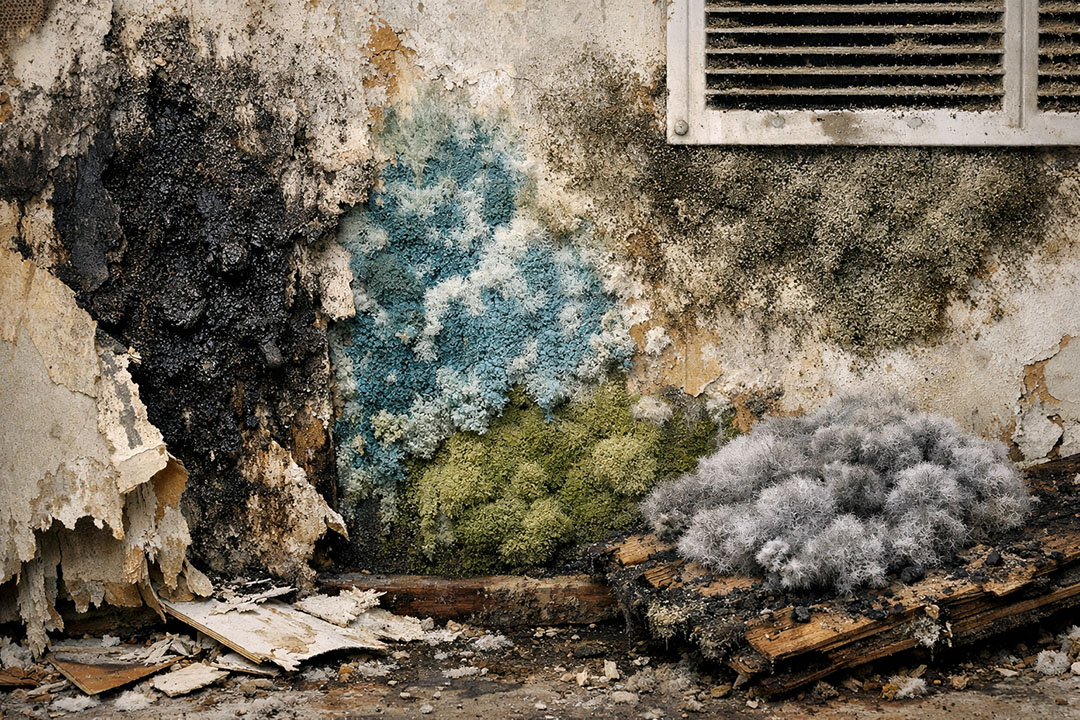
Mold from many species can affect health, but a handful are especially concerning because they are common indoors, produce strong allergens or mycotoxins, or can cause serious infections in vulnerable people. In practice, any significant indoor mold growth is treated as potentially harmful, but some genera deserve particular attention.
Big picture: common vs. “toxic” molds
CDC notes that the most common indoor molds are Cladosporium, Penicillium, and Aspergillus, with Alternaria also frequently found in house dust and on damp surfaces. Restoration and environmental health sources highlight Stachybotrys chartarum (black mold) as especially notorious due to its mycotoxin production, though many other species can also impact health.
The severity of health effects depends on species, the amount and duration of exposure, and individual susceptibility (asthma, allergies, immune status), not just the name of the mold.
Stachybotrys chartarum (“black mold”)
- Often called “toxic black mold,” this species thrives on chronically wet drywall, wood, and paper in areas with long‑term moisture or flooding.
- It can produce trichothecene mycotoxins, associated with respiratory problems, headaches, fatigue, and in some reports neurological symptoms and severe irritation.
- Some toxic‑mold references note that its mycotoxins can, under high exposure, contribute to serious lung and systemic effects, especially in infants and animals.
Because Stachybotrys usually indicates serious moisture damage and potential mycotoxin exposure, professional remediation is strongly recommended when it is suspected.
Aspergillus (multiple species)
- Aspergillus is one of the most common indoor molds, often found on walls, insulation, dust, and in HVAC systems in humid environments.
- Many species are strong allergens, causing asthma attacks, allergic rhinitis, and respiratory irritation in sensitive people.
- Some species (e.g., A. fumigatus) can cause aspergillosis, a serious lung infection, particularly in people with weakened immune systems or chronic lung disease.
- Others, like A. flavus, are known for producing aflatoxins, potent carcinogens that can contaminate food and increase liver cancer risk when ingested.
Because Aspergillus can both trigger allergies and, in high‑risk individuals, cause invasive infections, its presence in air systems and extensive indoor growth is considered high‑priority.
Penicillium
- Penicillium is widespread indoors, thriving on damp wallpaper, carpets, insulation, and water‑damaged furnishings.
- It produces allergens and sometimes mycotoxins that may lead to respiratory symptoms, allergic reactions, and, in immunocompromised people, infections.
- Species are often seen as blue‑green fuzzy colonies, including on food.
While not all Penicillium species are highly toxic, heavy indoor growth still poses respiratory and allergy risks and indicates moisture problems needing correction.
Cladosporium
- Cladosporium is another very common mold found both outdoors and indoors, frequently on walls, wood, carpets, and water‑damaged materials.
- It is a major allergen, often implicated in asthma flares, sinus issues, eye irritation, and skin problems, especially in sensitized individuals.
- While typically less toxic than Stachybotrys, high levels of Cladosporium indoors can significantly aggravate respiratory and allergic disease.
Because it is so prevalent, controlling moisture to limit Cladosporium growth is important for indoor air quality.
Alternaria
- Alternaria is common outdoors and often enters homes through open doors and windows; indoors it grows on showers, window frames, and damp textiles or dust.
- It is a strong allergen and recognized asthma trigger, with studies showing Alternaria in over 90% of house‑dust samples in some surveys.
- For people with asthma or mold allergies, Alternaria exposure can lead to wheezing, shortness of breath, and increased medication needs.
Even though Alternaria is not usually classified as “toxic,” its high allergenic potential makes it clinically significant.
Other concerning genera
Environmental and toxicology sources also highlight several additional molds that can be harmful under certain conditions:
- Chaetomium: Grows on chronically damp drywall and behind wallpaper; long‑term exposure is associated with skin and nail infections and, in some reports, neurologic effects.
- Fusarium: Often from soil and plants but can colonize indoor water‑damaged areas; some species produce toxins and can cause skin infections and systemic illness in immunocompromised people.
- Acremonium, Trichoderma, Ulocladium, Geotrichum, Aureobasidium: Various species have been linked to allergic reactions, skin and eye infections, and, rarely, more serious conditions such as brain abscess or bone infections in vulnerable individuals.
These are less commonly discussed than Stachybotrys or Aspergillus but still matter when found in heavy growth indoors, particularly in people with weakened defenses.
Practical takeaway
Health agencies consistently emphasize that focusing only on species can be misleading. CDC notes that common molds like Cladosporium, Penicillium, and Aspergillus are enough to cause problems, and that any significant mold growth in a damp building should be addressed, regardless of color or exact type.
In general:
- Most harmful in homes:
- Stachybotrys chartarum (black mold – strong toxins, indicates severe moisture)
- Aspergillus (allergy + infection risk, especially in HVAC)
- Penicillium, Cladosporium, Alternaria (major indoor allergens and asthma triggers)
- Risk is highest for infants, children, people with asthma or allergies, and anyone immunocompromised.
Rather than waiting for precise species identification, best practice is to treat any visible mold or persistent musty odor as a sign of an unhealthy indoor environment: eliminate the moisture source, remove contaminated materials appropriately, and, for larger or complex issues, involve qualified mold professionals.
 Welcome to the Melbourne Mold website. If you have any questions regarding mold at your home or business premises - we are here to help. Please call or complete the form to the right, and we will be in touch at the earliest opportunity.
~ Greg Bertaux