
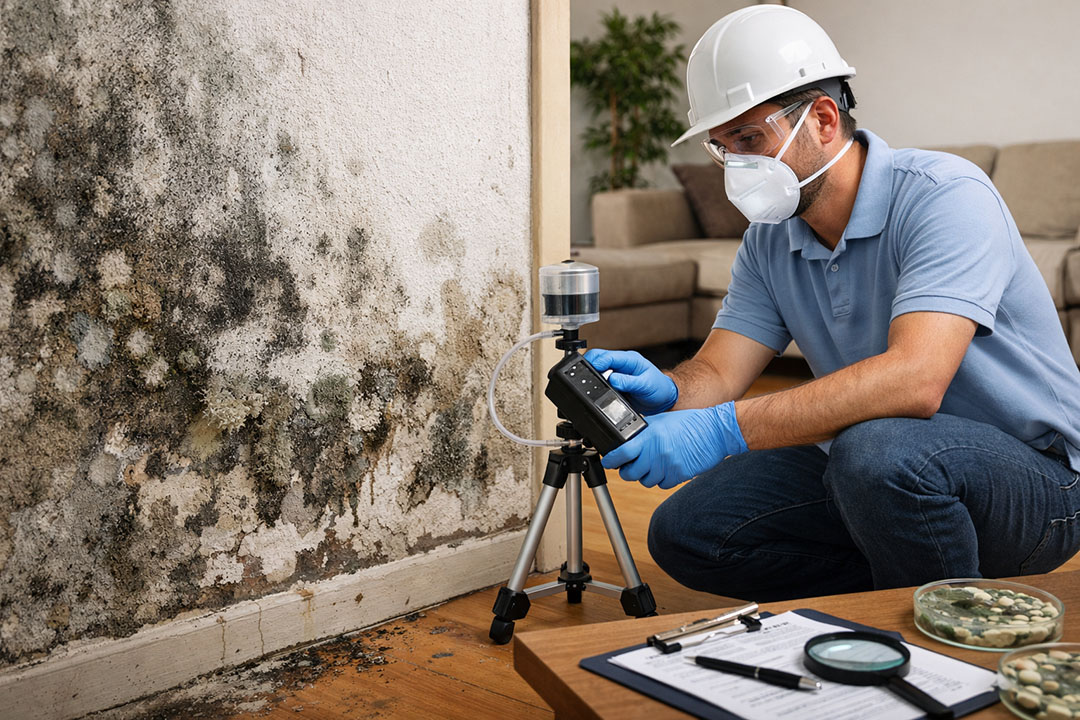
Finding mold in your home can be unsettling. Whether it’s a musty odor, dark spots on a wall, or a concern raised during a home inspection, one question almost always comes up first: Is all mold toxic, or only certain kinds?
The short answer is no, not all molds are toxic. In fact, most molds are not. However, some types can produce toxins under the right conditions, which is why understanding the difference—and knowing when mold testing matters—is essential for homeowners.
This guide breaks down the facts, clears up common myths, explains potential health impacts, and shows why professional mold testing plays such an important role.
What Is Mold and Why Does It Grow in Homes?
Mold is a type of fungus that exists naturally in the environment. Outdoors, it helps decompose organic matter like leaves and wood. Indoors, mold becomes a problem when excess moisture allows spores to grow on surfaces such as drywall, wood framing, insulation, carpet, or ceiling tiles.
Common moisture sources include:
- Roof or plumbing leaks
- Flooding or water intrusion
- High indoor humidity
- Poor ventilation in bathrooms, kitchens, or basements
Mold growth doesn’t automatically mean danger—but it does mean moisture is present, and that’s the real issue.
Are All Molds Toxic?
No. Most molds are not toxic.
There are thousands of known mold species, and the majority do not produce toxins. Many molds are considered allergenic, meaning they can trigger allergy-like symptoms but are not poisonous.
Only a relatively small group of molds are classified as toxigenic, meaning they can produce substances called mycotoxins. Even then, toxin production depends on environmental conditions—not just the presence of the mold itself.
The Key Distinction Homeowners Should Understand
- Mold species ≠ toxicity
- Toxin production is conditional
- Health risk depends on exposure level and duration
This is why visual inspection alone cannot determine whether a mold problem is dangerous.
Understanding “Toxic Mold” (and Why the Term Is Misleading)
The phrase “toxic mold” is widely used, but it’s not a scientific term. A more accurate description is toxigenic mold, meaning the mold has the potential to produce toxins.
Important factors that influence toxin production include:
- Moisture level and duration
- Temperature
- Type of surface the mold is growing on
- Age of the mold colony
A toxigenic mold may be present in a home without producing toxins at all, which is why panic-based assumptions often do more harm than good.
Common Myths About Mold Toxicity
Myth #1: Black Mold Is Always Dangerous
Color is not an indicator of toxicity. Many harmless molds are black, green, or dark brown. Likewise, some toxigenic molds appear light in color. You cannot identify toxic mold by appearance alone.
Myth #2: Any Mold Means the Home Is Unsafe
Low levels of mold spores exist in every home. Concern increases when mold growth is extensive, hidden behind walls, or associated with water damage—but not all mold requires drastic remediation.
Myth #3: Mold Odor Equals Toxic Exposure
A musty smell indicates mold growth, not toxicity. Odor strength does not correlate with health risk.
Potential Health Impacts of Mold Exposure
Health effects vary depending on the individual, the type of mold, and the level of exposure.
Common Symptoms
- Sneezing, coughing, or nasal congestion
- Itchy or watery eyes
- Skin irritation
- Headaches
Higher-Risk Individuals
Some people are more sensitive to mold exposure, including:
- Infants and young children
- Elderly individuals
- People with asthma or allergies
- Those with compromised immune systems
For these groups, even non-toxic molds can cause symptoms, which is why professional evaluation is so important.
Why Mold Testing Matters
Because mold toxicity cannot be determined visually, professional mold testing provides clarity when homeowners need real answers—not guesses.
Mold testing can:
- Identify the types of mold present
- Measure airborne spore levels
- Compare indoor levels to outdoor baselines
- Determine whether conditions support potential toxin production
Just as important, testing helps distinguish between:
- Normal background mold levels
- Moisture-related mold amplification
- Situations that warrant remediation
Without testing, homeowners may either underestimate a real issue—or overspend on unnecessary cleanup.
Mold Testing vs. Mold Remediation: Why Independence Matters
An often-overlooked point is who performs the testing. Independent mold testing—separate from remediation—helps ensure results are objective and focused on diagnosis rather than sales.
A proper mold assessment looks at:
- Moisture sources
- Building conditions
- Occupant health concerns
- Lab data interpreted in context
The goal isn’t to label a home “toxic.” The goal is to understand what’s happening and how to fix it correctly.
The Bottom Line for Homeowners
- Not all molds are toxic
- Only certain molds can produce toxins
- Even those molds are not always producing toxins
- Moisture control is the real key to prevention
Mold should be taken seriously—but not feared blindly. Accurate information, professional testing, and targeted action are far more effective than assumptions or alarmist reactions.
 Welcome to the Melbourne Mold website. If you have any questions regarding mold at your home or business premises - we are here to help. Please call or complete the form to the right, and we will be in touch at the earliest opportunity.
~ Greg Bertaux