
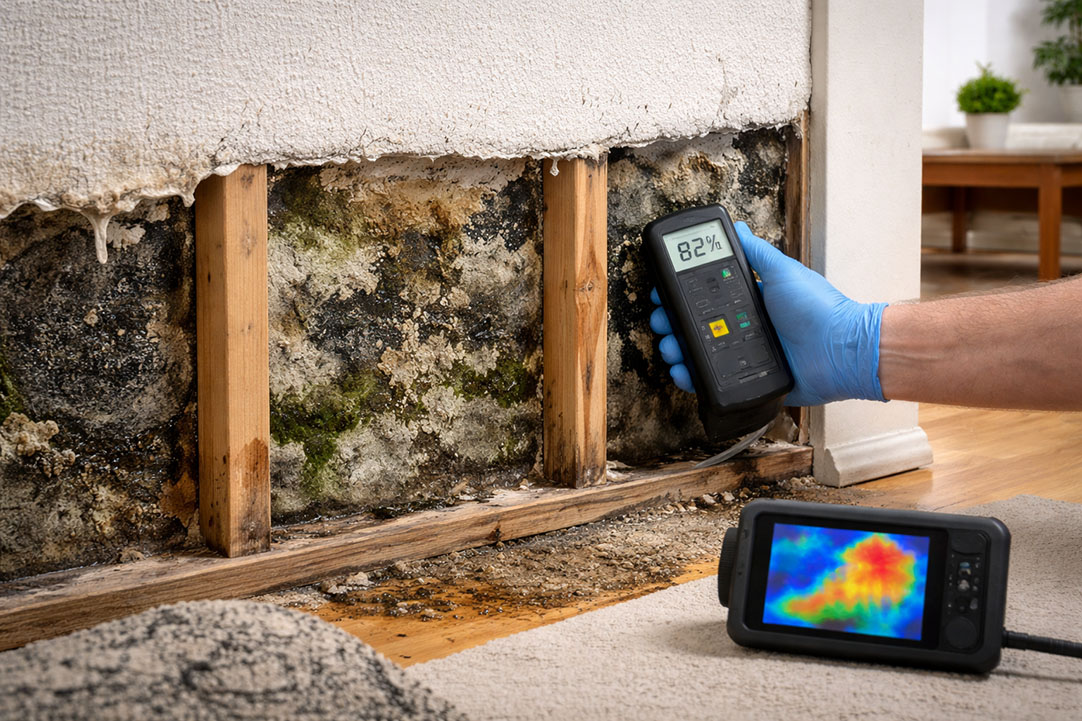
Mold problems aren’t always obvious. In fact, some of the most serious mold issues are the ones you can’t see. Hidden mold growing behind walls, under floors, or above ceilings, often goes unnoticed for months or even years, quietly spreading wherever moisture is present.
Because mold needs darkness, moisture, and a food source, enclosed building cavities can become ideal environments. Knowing the early warning signs of hidden mold can help homeowners take action before minor moisture issues turn into major repairs or health concerns.
Why Hidden Mold Is So Common
Hidden mold typically develops after:
-
Plumbing leaks inside walls
-
Roof leaks or ice damming
-
Flooding or water intrusion
-
Condensation from poor insulation
-
Long-term high indoor humidity
Even when surfaces appear dry, moisture can remain trapped inside wall cavities, beneath flooring, or under cabinets. Mold doesn’t need standing water—just persistent dampness.
1. Persistent Musty or Earthy Odors
One of the most common signs of hidden mold is a musty smell that doesn’t go away, even after cleaning or airing out the space.
Key clues:
-
Odor is strongest near certain walls or floors
-
Smell intensifies when HVAC systems run
-
Odor worsens during humid or rainy weather
A musty smell often means mold is growing somewhere out of sight. While odor alone doesn’t indicate toxicity, it’s a strong signal that further investigation is needed.
2. Unexplained Health Symptoms Indoors
Hidden mold is often suspected when people feel worse at home—but better when they leave.
Possible symptoms include:
-
Chronic coughing or throat irritation
-
Nasal congestion or sinus pressure
-
Headaches
-
Eye irritation
-
Increased asthma or allergy symptoms
These symptoms don’t automatically mean mold exposure, but if they consistently occur in specific areas of the home, indoor air quality—including hidden mold—should be evaluated.
3. Discoloration or Staining on Walls, Ceilings, or Floors
While hidden mold itself isn’t visible, its presence can leave secondary clues on finished surfaces.
Watch for:
-
Yellow, brown, or dark water stains
-
Bubbling or peeling paint
-
Warped drywall or baseboards
-
Discoloration that returns after repainting
These signs often indicate moisture inside the wall cavity—an environment where mold can thrive.
4. Warped, Buckling, or Soft Flooring
Mold under floors usually follows water exposure, especially in:
-
Bathrooms
-
Kitchens
-
Laundry rooms
-
Basements
Red flags include:
-
Wood floors that cup or buckle
-
Laminate flooring that feels spongy
-
Tiles that loosen or crack
-
Persistent dampness near floor edges
Moisture trapped beneath flooring materials can lead to mold growth on subfloors, joists, or insulation—completely hidden from view.
5. Recent or Past Water Damage (Even If It “Dried”)
Many homeowners assume that if water damage dried quickly, mold won’t be an issue. Unfortunately, that’s not always true.
High-risk scenarios include:
-
Leaks repaired without drying wall cavities
-
Flooding where flooring wasn’t removed
-
Roof leaks that went unnoticed
-
HVAC condensation issues
Mold can begin growing within 24–48 hours of moisture exposure. If materials weren’t properly dried, hidden mold may already be present.
6. Cracking or Deteriorating Building Materials
Mold itself doesn’t always destroy materials, but the moisture that allows mold to grow often does.
Look for:
-
Crumbling drywall
-
Soft or rotting wood
-
Loose baseboards or trim
-
Nails or fasteners rusting through surfaces
These issues suggest prolonged moisture exposure – one of the strongest predictors of hidden mold.
7. Mold Appearing Repeatedly in the Same Area
If surface mold keeps returning after cleaning, it’s often a sign that the source is deeper than what’s visible.
Common examples:
-
Mold repeatedly forming at baseboards
-
Recurring growth near bathroom walls
-
Persistent mold near exterior-facing walls
Surface cleaning doesn’t address mold growing inside walls or under floors. Without fixing the moisture source, the problem will continue.
Why DIY Inspections Often Miss Hidden Mold
Hidden mold can’t be reliably detected by:
-
Sight alone
-
Smell alone
-
Store-bought mold kits
Professional mold inspections use tools such as:
-
Moisture meters
-
Thermal imaging cameras
-
Air sampling
-
Cavity or targeted sampling when appropriate
These methods help identify conditions that support mold growth even when no visible mold is present.
When Mold Testing Makes Sense
Mold testing is especially valuable when:
-
Odors persist without visible mold
-
Health symptoms lack a clear cause
-
Buying or selling a home
-
After water damage or flooding
-
Before opening walls during renovations
Testing helps determine whether mold is present, how widespread it may be, and whether remediation is actually needed—preventing both underreaction and overreaction.
The Bottom Line for Homeowners
Hidden mold isn’t always dramatic but it is common. The warning signs are often subtle: smells, moisture clues, recurring issues, or unexplained discomfort indoors.
Key takeaways:
-
Mold loves moisture, not visibility
-
Hidden mold often follows water damage
-
Visual inspections aren’t enough
-
Early detection saves money and stress
If something in your home doesn’t seem right, trust the pattern not just appearances. Addressing moisture issues early and getting accurate information can prevent small problems from becoming expensive ones.
 Welcome to the Melbourne Mold website. If you have any questions regarding mold at your home or business premises - we are here to help. Please call or complete the form to the right, and we will be in touch at the earliest opportunity.
~ Greg Bertaux