
When most homeowners think about mold, they picture dark patches in the bathroom or fuzzy growth under a leaky sink. While those are common problem areas, mold is far sneakier than many people realize. In fact, some of the most serious mold issues develop in places you rarely see, check, or even think about. Knowing where mold likes to hide can help you catch problems early, protect your indoor air quality, and avoid costly remediation down the road.
Here are some of the most unusual, and often overlooked, places mold may be hiding in your home.
Inside Walls and Wall Cavities
Mold doesn’t need much space to grow, just moisture and a food source. A small plumbing leak, roof issue, or condensation problem can introduce moisture behind drywall. Because drywall and wood framing are organic materials, they’re ideal for mold growth. The scary part? You may never see it until the damage is extensive. Warning signs include musty odors, unexplained allergy symptoms, bubbling paint, or warped walls.
HVAC Systems and Air Ducts
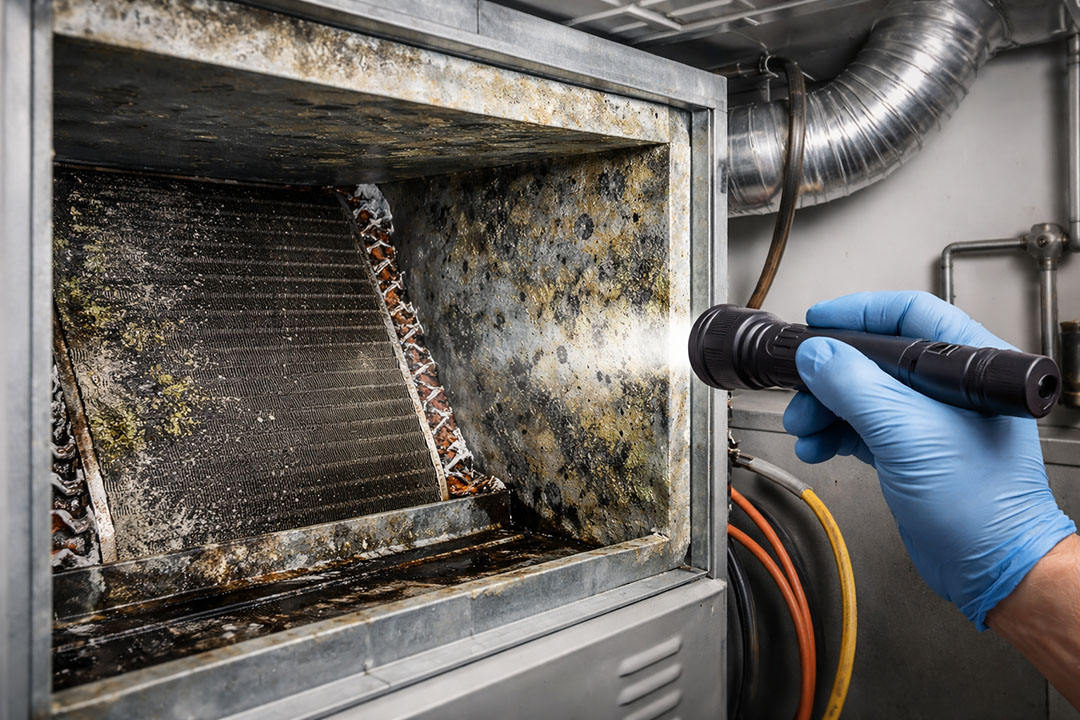
Your heating and cooling system can be both a breeding ground and a distribution system for mold. Condensation inside air handlers, dirty drip pans, or poorly insulated ductwork can allow mold to grow out of sight. Once established, mold spores can be circulated throughout the home every time the system runs. If you notice a musty smell when your HVAC turns on, this is a major red flag.
Behind and Under Appliances
Large appliances like refrigerators, dishwashers, washing machines, and even water heaters can leak slowly over time. Because these appliances are rarely moved, moisture can build up unnoticed. Dust, lint, and food particles provide plenty of material for mold to feed on. Homeowners are often shocked to discover significant mold growth when an appliance is finally pulled away from the wall.
Attics with Poor Ventilation
Attics are commonly associated with dry conditions, but improper ventilation can trap warm, moist air, especially in colder months. This leads to condensation on roof decking and insulation, creating an ideal environment for mold. Attic mold is particularly concerning because it can weaken structural components and impact air quality in the living spaces below.
Crawl Spaces and Basement Rim Joists
Crawl spaces are naturally humid, dark, and often poorly ventilated, making them prime mold territory. One area that frequently gets overlooked is the rim joist, where the foundation meets the framing. This area is prone to condensation and can quietly develop mold that spreads into insulation and floor systems above.
Inside Cabinets and Closets
Closets on exterior walls or cabinets under sinks often have limited airflow. Add a small leak or seasonal condensation, and mold can take hold. Because these spaces are usually closed and cluttered, growth can go unnoticed for long periods. A persistent musty smell when you open a cabinet or closet is often the first clue.
Window Frames and Door Tracks
Condensation around windows and doors is common, especially in humid climates or during temperature swings. Mold can grow inside window frames, behind trim, or in sliding door tracks where moisture collects. This type of mold is easy to miss during routine cleaning but can spread into surrounding materials.
Upholstered Furniture and Mattresses
Furniture that sits against exterior walls or in damp rooms can absorb moisture from the air. Upholstered furniture, rugs, and mattresses can harbor mold deep within their materials, even if the surface looks clean. This is especially common in basements or homes with chronic humidity issues.
Stored Items and Cardboard Boxes
Cardboard, paper, and fabric stored in garages, basements, or attics are excellent food sources for mold. Once mold starts growing on stored items, it can easily spread to surrounding areas. That old box of holiday decorations may be hiding more than just ornaments.
Why Professional Mold Testing Matters
Because many of these areas are hidden, mold problems often go undetected until health symptoms or structural damage appear. Professional mold testing can help identify hidden mold, determine the extent of contamination, and guide safe, effective remediation.
If you suspect mold in your home, don’t rely on guesswork. Early detection is key to protecting both your property and your health.
 Welcome to the Melbourne Mold website. If you have any questions regarding mold at your home or business premises - we are here to help. Please call or complete the form to the right, and we will be in touch at the earliest opportunity.
~ Greg Bertaux