
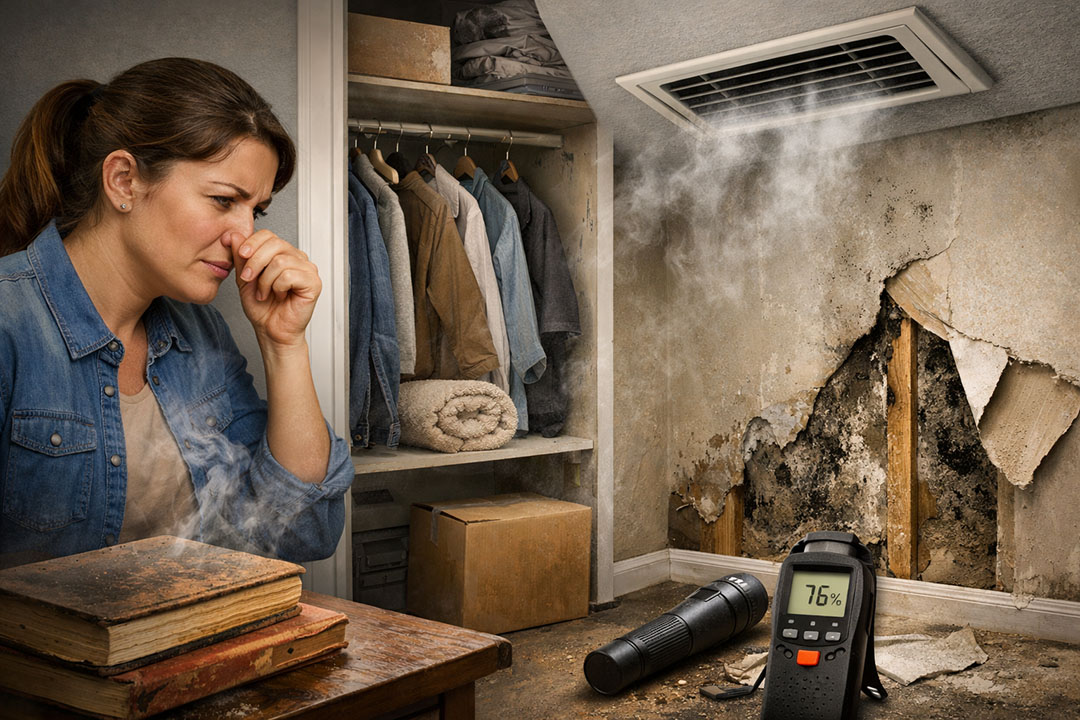
Long before you see a single spot of mold on a wall or ceiling, your nose is often already warning you that something is wrong. That faint “old basement” smell in a bedroom, the damp towel odor in a walk‑in closet, or the earthy scent that appears only when the air conditioner turns on – these are all early clues that moisture and mold may be brewing out of sight. For homeowners, tenants, and property managers, learning to recognize and document these odor patterns can turn your nose into a powerful early detection tool and save thousands in repairs.
This article unpacks what those “mystery smells” can really mean and how to use them to guide a smart, targeted mold investigation instead of guessing in the dark.
What does mold actually smell like?
There is no single universal “mold smell,” but most people describe mold‑related odors in similar ways:
-
Musty or earthy, like damp soil, old books, or a forest floor after rain.
-
Stale, like wet cardboard, old carpet, or a gym bag left in a car.
-
Sometimes slightly sweet or “sour,” especially in closed, humid spaces.
These odors come from gases called microbial volatile organic compounds (mVOCs) that mold and bacteria release as they grow and digest material. You can think of mVOCs as the “exhaust fumes” of microscopic life. They are often noticeable at levels far below what you would need to see visible spots of growth, which is why smell is such an important early warning sign.
Not every musty odor is dangerous, but persistent, localized mustiness usually means one thing: somewhere nearby, moisture is lingering long enough to support microbial growth. The key is to pay attention to when and where the odor appears.
Common odor patterns and what they suggest
When I investigate odor complaints, I listen as carefully to the story of the smell as I do to any lab result. Here are some recurring patterns and what they often indicate.
-
Odor only when the HVAC runs
If you notice a musty smell that appears within a few minutes of the AC or heat turning on, then fades when the system is off, the HVAC system becomes a prime suspect. Possible sources include:
-
Growth on or near the air handler, evaporator coil, or insulation in the air handler closet.
-
Wet or dusty ductwork, especially flex duct that has been exposed to condensation or past leaks.
-
Oversized systems that short‑cycle, leading to poor humidity control and clammy, musty rooms.
-
Odor strongest in the morning or after being away
When spaces sit closed up overnight or while you are at work, humidity and CO₂ rise, air becomes stagnant, and odors concentrate. If you open the front door and are hit with a strong musty puff that dissipates after some ventilation, you may be dealing with:
-
Elevated overall humidity in the home (often above 60%), especially in humid climates or seasons.
-
Moisture in hidden areas such as wall cavities or under flooring that off‑gasses more noticeably when air is still.
-
Odor isolated to one room or corner
A very localized smell—say, only in the back corner of a bedroom, or only along one wall of a living room—is often a clue that something specific is happening right there. Common culprits:
-
An exterior wall with poor insulation or a history of water intrusion.
-
A plumbing leak in an adjacent bathroom, laundry area, or kitchen.
-
A poorly sealed window or door where rainwater infiltrates and dampens framing.
-
Odor in closets, pantries, and storage areas
Closed, dark, and often poorly ventilated, these spaces are mold favorites. Mustiness here often reflects:
-
High ambient humidity in the home plus restricted airflow in the closet.
-
Exterior walls behind closet shelving that are cooler and prone to condensation.
-
Stored items (boxes, luggage, fabrics) that absorbed moisture in a previous home or event and are now off‑gassing.
Noticing which of these patterns most closely matches your situation can dramatically narrow the search area before anyone opens a wall or orders testing.
How to document odors before calling a professional
One of the most useful things you can do before calling a mold testing expert is to document the odor in a systematic way. This transforms a vague complaint (“it just smells musty sometimes”) into concrete clues that guide the inspection. Here’s a simple process you can follow over several days.
-
Create an “odor log”
Use a notebook or notes app and record:
-
Date and time when you notice the odor.
-
Location (be specific: “north wall of master bedroom near nightstand,” not just “bedroom”).
-
Intensity on a 1–10 scale.
-
What is happening at the time: HVAC on or off, windows open or closed, rain or dry weather, cooking, showering, laundry, etc.
-
Map the nose tour
Take a slow “nose tour” of the home at different times of day. Walk room to room, open closets, sniff near baseboards, behind furniture, and around windows. Note any hotspots. Sometimes, simply moving a large piece of furniture away from a wall reveals a clear odor difference, which hints at hidden moisture behind that wall. -
Correlate with building history
In your log, add notes about:
-
Known past leaks (roof, plumbing, windows, appliances).
-
Flooding events, overflows, or storm damage.
-
Recent renovations (new flooring, bathroom remodels, window replacements).
This history, combined with your odor map, can help a professional zero in on the most likely hidden moisture areas rather than relying on random guesses.
How professionals use odor clues in an inspection
When a mold testing expert arrives, they will not treat your nose‑based observations as “unscientific.” On the contrary, odor complaints are often the starting point for a structured investigation. A typical process might include:
-
Confirming odor patterns: walking the space with you, verifying where and when the smell is strongest.
-
Targeted moisture measurements: using moisture meters on suspect walls, ceilings, and floors near odor hotspots.
-
Infrared scanning (when appropriate): looking for temperature anomalies that suggest wet areas, especially after recent rain or use of plumbing fixtures.
-
Strategic sampling: if needed, collecting air or surface samples from the most suspicious areas rather than randomly.
Because odors often emerge before major visible damage, this approach can identify developing problems while they are still relatively localized—and therefore less expensive to address.
When odor means “act now”
Not every whiff of mustiness requires emergency action, but there are times when your nose is telling you not to wait. Consider treating the situation as urgent if:
-
The odor is strong and persistent in a child’s bedroom or a room used by someone with asthma, allergies, or other respiratory conditions.
-
You smell mustiness after a clear water event (pipe burst, roof leak, storm intrusion), even if everything looks “dried out” on the surface.
-
The odor is accompanied by soft, spongy, or discolored building materials, or by visible mold growth.
-
You notice headaches, congestion, or irritation that reliably improves when you leave the building.
In these scenarios, delaying investigation can allow moisture and microbial growth to progress deeper into materials, expanding the scope and cost of eventual remediation.
Turning your nose into a diagnostic tool
You do not need specialized equipment to be an effective first responder to indoor environmental problems. By learning to recognize common mold‑related odor patterns, keeping a simple log, and connecting smells with moisture history and building details, you give yourself and any professional you hire a major head start.
Instead of ignoring that “wet dog” smell in the closet or flooding the entire house with air fresheners, you can treat odor as a data point, one that points toward specific questions: Where could moisture be coming from? How long has it been there? What is the smallest, smartest next step to investigate?
In mold work, early, informed action almost always costs less than late, reactive action. When you listen carefully, your nose often tells you which path you are on.
 Welcome to the Melbourne Mold website. If you have any questions regarding mold at your home or business premises - we are here to help. Please call or complete the form to the right, and we will be in touch at the earliest opportunity.
~ Greg Bertaux