
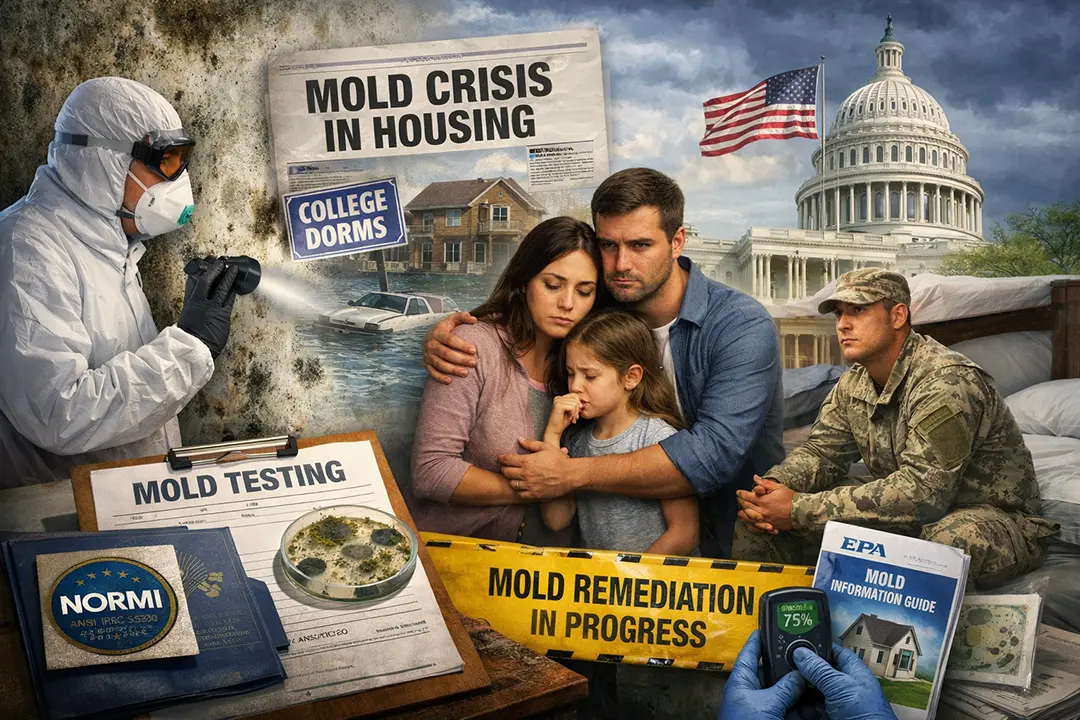
Public awareness around mold is changing fast, and industry groups are racing to meet people where they are: online, on campuses, in disaster zones, and in legislatures. At the center of this shift are organizations like NORMI and federal partners that are reframing mold not as a niche building defect, but as a mainstream health and housing issue that demands clear information and stronger protections.
From obscure trade topic to kitchen‑table issue
For years, mold lived mostly in the fine print of home inspection reports and insurance exclusions; now it is a front‑page concern after hurricanes, floods, and highly publicized housing failures. Coastal states, college campuses, and military housing all provide high‑visibility examples of people getting sick or displaced because damp buildings were never properly repaired. Media coverage of “hidden health crises” after natural disasters has helped the public connect dots between climate‑driven flooding, chronic dampness, and long‑term respiratory issues.
This visibility is driving demand for accessible, trustworthy information. Homeowners, tenants, parents, and service members are searching for clear answers about what mold means for their health, what “good” remediation looks like, and which contractors they can trust. In response, trade organizations and public‑health partners are ramping up educational content that translates technical standards into practical guidance anyone can use.
NORMI’s push: news, training, and the MOLD Act
The National Organization of Remediators and Microbial Inspectors (NORMI) has positioned itself as both an educator and an advocate. Its “Mold News and Information” hub publishes ongoing updates about legislation, health topics, and training opportunities, designed to keep both professionals and the public current on best practices. Recent posts highlight several major initiatives that illustrate how public education and policy are converging.
One headline initiative is NORMI’s support for the Military Occupancy Living Defense (MOLD) Act, a federal bill that would overhaul how mold is handled in military housing. The Act requires formal assessments before any remediation begins, mandates adherence to the ANSI/IICRC S520 standard, and calls for post‑remediation clearance testing and ongoing monitoring. It also specifies that anyone performing assessment or remediation must hold certifications from recognized bodies such as IICRC, NORMI, or ACAC, effectively baking credible training into the law. NORMI describes this as a transformational step toward standardized, science‑based mold protocols that protect both buildings and occupants.
New educational fronts: mold illness and dorm life
NORMI is not limiting its outreach to contractors. It recently launched a public‑facing online course, “Understanding Mold Illness: The Basics,” in collaboration with George Washington University. This course is designed for both mold professionals and everyday people who suspect health impacts from mold exposure, covering foundational concepts in an accessible way. The move signals an important trend: health‑focused education, not just technical remediation training, is becoming core to the industry’s mission.
On campuses, NORMI has formed a Medical Advisory Board to tackle dorm room health concerns, a response to widespread reports of students living with mold in residence halls. By pairing environmental professionals with medical experts, this initiative aims to give universities, parents, and students clearer guidelines for identifying problems, escalating concerns, and ensuring that remediation addresses health risks—not just cosmetic stains. It also models the kind of cross‑disciplinary collaboration that emerging legislation is beginning to require.
Legislation as education by another name
Policy changes themselves are becoming powerful educational tools. The MOLD Act, as analyzed in industry coverage, is part of a “new rulebook” in which states and federal agencies tie mold response to public‑health infrastructure rather than leaving it solely to construction and licensing boards. California, Illinois, Iowa, North Carolina, West Virginia, Virginia, and New Hampshire are cited as states moving to involve health departments more directly in mold complaints and guidance.
Illinois provides a clear example. Beginning in 2025, the state will require evidence of active third‑party certification for mold contractors, recommending credentials from organizations like NORMI. The intent is educational as much as regulatory: by signaling which qualifications matter, the state helps consumers distinguish between marketing claims and verifiable competence. NORMI, in turn, offers model legislation to states developing licensing laws, emphasizing “sound, reasonable regulations” that protect the public without stifling legitimate businesses.
Reaching homeowners where moisture meets mold
Alongside legislation and professional training, day‑to‑day public education still hinges on simple, actionable guidance. Resources like the U.S. EPA’s “Brief Guide to Mold, Moisture and Your Home” break complex building‑science concepts down into clear steps: act quickly after leaks, keep indoor humidity low, and consult experienced contractors for large or complex problems. These messages are echoed and amplified by trade groups, which often integrate federal guidance into their own homeowner‑focused materials and webinars.
In disaster‑prone regions, community‑based programs are filling critical gaps. After major storms and floods, some local organizations now run “mold busters” initiatives that train residents to safely remove mold from homes, churches, and small businesses, while also providing free remediation to vulnerable households. Public‑health experts and advocates argue that governments must increase funding for mold remediation and strengthen building codes and flood‑resistant design to prevent people from facing the impossible choice between unsafe housing and homelessness. These programs demonstrate how mold education can be both highly practical and deeply tied to environmental justice.
A new era of collaboration and accountability
Taken together, these developments show that mold education is no longer a side project—it is becoming a central pillar of how the industry operates and how policy is written. Trade organizations like NORMI use news hubs, certification programs, and public courses to turn evolving science and legislation into everyday practice. Legislatures, in turn, are starting to treat credible certifications and standards as prerequisites for doing business, using the law itself to signal what “good” looks like.
For professionals, this means that mastering communication is now as important as mastering containment or negative air setups. Explaining why an assessment must precede remediation, why a particular standard is being followed, or how post‑remediation verification protects a family’s health is part of the job. For the public, it means more tools to ask better questions: Is my contractor certified? Are they following recognized standards? Will there be documented clearance testing?
As climate change intensifies flooding and dampness, and as high‑profile failures continue to make headlines, the mold industry’s credibility will increasingly depend on how well it educates, not just how well it cleans. The emerging partnership between medical experts, building‑science professionals, and legislators suggests that the next chapter of mold management will be defined by cooperation, accountability, and a shared goal: keeping both buildings and the people inside them genuinely healthy.
 Welcome to the Melbourne Mold website. If you have any questions regarding mold at your home or business premises - we are here to help. Please call or complete the form to the right, and we will be in touch at the earliest opportunity.
~ Greg Bertaux