
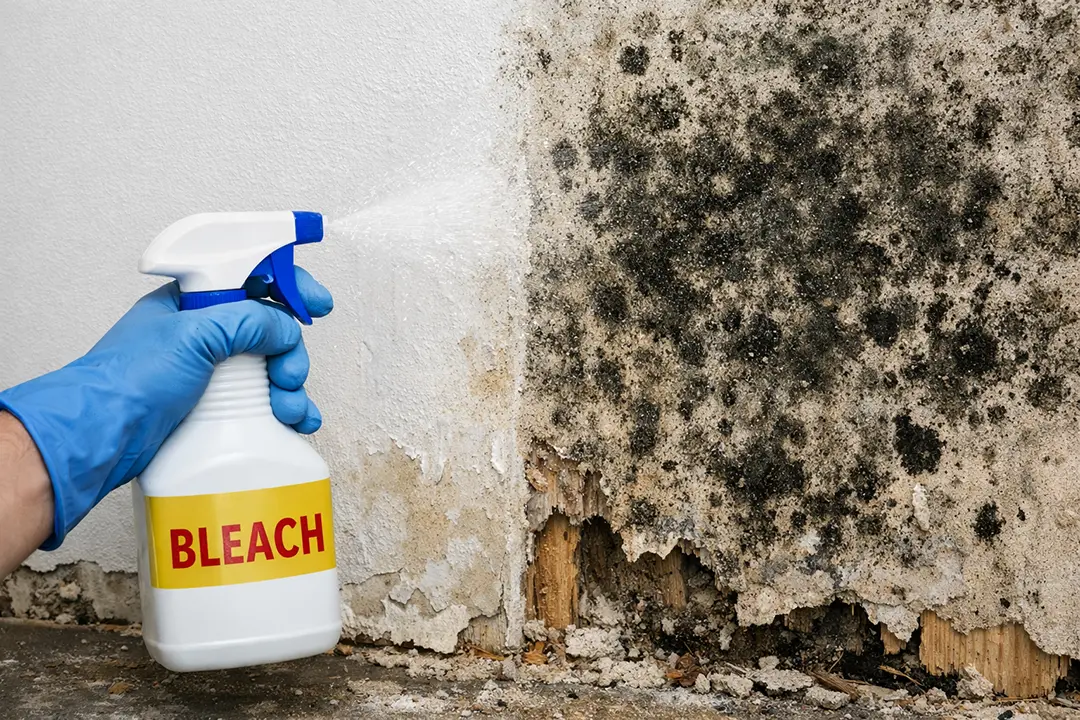
Using bleach on mold is one of the most common home-cleanup mistakes, and it often makes the problem look better while actually leaving the root cause untouched. On porous materials like drywall, wood, ceiling tiles, and fabric, bleach usually removes the stain on the surface but does not solve the contamination underneath, which is why mold often returns quickly.
Mold is not just a cosmetic stain. It is a living organism that spreads through tiny structures and spores, and it thrives when moisture is present. If you only bleach the visible patch, you may create the illusion of success while the hidden mold remains active in the material.
Bleach Does Not Reach the Root
The biggest problem with bleach is penetration. Mold commonly grows deep inside porous surfaces, and bleach does not soak in far enough to destroy the growth embedded below the surface. That means the black, green, or white discoloration may fade, but the mold colony itself can survive and keep expanding.
This is why bleaching can feel effective at first and then fail later. A wall, beam, or cabinet may look clean for a short time, then show new growth days or weeks later because the underlying moisture and contamination were never removed.
Bleach Adds Moisture
Bleach is mostly water, and mold loves water. When you spray bleach on a moldy porous surface, the liquid can be absorbed into the material and create the damp environment mold needs to keep growing. Instead of drying out the problem, you may be feeding it.
This is especially bad on drywall, wood framing, and unfinished masonry. These materials can wick moisture deeper into the structure, which may allow mold to spread beyond the area you can see.
It Creates False Confidence
Bleach can make mold disappear visually, but that does not mean the problem is gone. Many people mistake a cleaner-looking surface for a safe surface, then stop investigating the source of the moisture. That delay can allow a small issue to become a much larger remediation project.
A cosmetic fix is dangerous because it can hide structural damage. If mold is coming from a leak, condensation problem, or humidity issue, the stain is only a symptom. The real repair must address the water source, not just the surface color.
It Can Make Indoor Air Worse
Spraying bleach can disturb mold and spread particles into the air, especially if the area is already compromised. Those airborne spores and fragments can irritate people with allergies, asthma, or other respiratory sensitivities.
Bleach also introduces harsh chemical fumes into the space. In enclosed rooms, that can worsen eye, throat, and lung irritation right when you are already dealing with a moisture problem. Mixing bleach with other cleaners can make the risk even more serious.
It Can Damage Materials
Bleach is not gentle on surfaces. On wood, it can weaken fibers; on metal, it can contribute to corrosion; and on some finishes, it can cause discoloration or surface damage. So even when it does not solve the mold issue, it may still damage the material you were trying to save.
That matters because mold cleanup is often already expensive. If bleach ruins a cabinet, framing member, or piece of furniture, the repair bill can become much higher than it needed to be.
What Works Better
The better approach is to remove the moisture source first, then clean or remove contaminated materials based on the surface type and extent of growth. Non-porous surfaces may sometimes be cleaned successfully, but porous materials that are deeply contaminated often need removal rather than surface treatment.
A proper response usually includes finding the leak, drying the area thoroughly, reducing humidity, and using remediation methods that actually address the affected material. For widespread mold, hidden growth, or HVAC involvement, professional assessment is often the safest path.
Practical Rule
A simple rule helps: if the mold is on something porous, bleach is usually the wrong tool. If the mold is caused by a moisture problem, bleach is never the full solution. And if the area is large, recurring, or affecting indoor air quality, the problem needs real remediation, not a quick cosmetic fix.
Bleaching mold is the worst thing you can do because it can hide the problem, add moisture, spread contamination, damage materials, and expose you to unnecessary fumes while leaving the real mold issue in place.
 Welcome to the Melbourne Mold website. If you have any questions regarding mold at your home or business premises - we are here to help. Please call or complete the form to the right, and we will be in touch at the earliest opportunity.
~ Greg Bertaux