
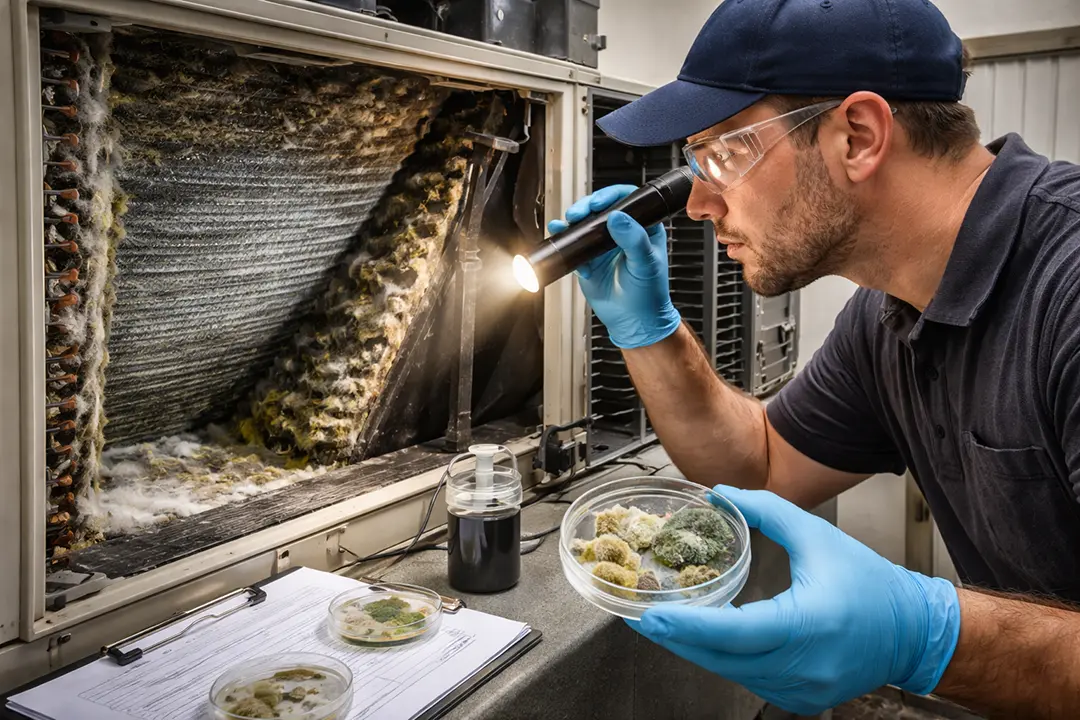
Mold growth inside HVAC systems is a hidden problem that can quickly escalate into a serious health and structural concern. Because heating, ventilation, and air conditioning systems circulate air throughout an entire building, mold spores can spread rapidly once they take hold. Identifying mold early is essential to protecting indoor air quality, preventing costly repairs, and safeguarding occupant health. Understanding how to properly test for mold in HVAC systems allows homeowners and facility managers to act before the problem becomes widespread.
Why Mold Develops in HVAC Systems
HVAC systems create an environment where mold can thrive if conditions are right. Mold requires three key elements to grow: moisture, organic material, and suitable temperatures. HVAC systems naturally provide all three. Condensation forms on cooling coils, dust accumulates in ducts, and temperatures often remain within a range that supports microbial growth.
Common causes of mold in HVAC systems include clogged drain lines, high indoor humidity, dirty filters, and poor ventilation. When moisture is not properly drained or humidity is not controlled, mold can begin growing within ducts, coils, or insulation. Once spores are present, the system can distribute them throughout the entire space.
Early Warning Signs of Mold in HVAC Systems
Before testing begins, it is helpful to recognize early warning signs that indicate possible mold presence. A musty or earthy odor when the system is running is one of the most common indicators. You may also notice increased allergy symptoms, such as sneezing, coughing, or eye irritation, especially when the HVAC system is in use.
Visible signs can include dark spots around vents, discoloration on duct surfaces, or buildup near drip pans. However, mold inside ductwork is often hidden, which is why testing becomes necessary even when visible evidence is limited.
Types of Mold Testing Methods
There are several ways to test for mold in HVAC systems, ranging from simple DIY approaches to professional laboratory analysis. Each method has its advantages depending on the level of concern and the need for accuracy.
Air sampling is one of the most common methods. This involves collecting air samples from different areas, including near vents and inside ducts, to measure the concentration of mold spores. These samples are then analyzed in a lab to determine the type and quantity of mold present.
Surface sampling is another method, which involves swabbing or tape-lifting areas suspected of mold growth. This is useful for confirming whether visible discoloration is actually mold and identifying the species.
Bulk sampling involves collecting pieces of material, such as insulation or debris from inside ducts, and sending them to a laboratory. This method is more invasive but provides detailed information about contamination levels.
How to Perform Basic DIY Mold Testing
For homeowners looking to do a preliminary check, DIY mold testing kits are widely available. These kits typically include petri dishes or swabs that allow you to collect samples from the air or surfaces.
To perform a basic test, turn off the HVAC system and allow the air to settle. Place the test kit near vents or inside accessible duct openings. After the recommended exposure time, seal the sample and send it to the designated lab if required.
While DIY kits can indicate the presence of mold, they often lack precision in identifying species or concentration levels. They are best used as an initial screening tool rather than a definitive diagnosis.
Inspecting Key HVAC Components
Testing should always be combined with a thorough visual inspection of critical HVAC components. Start with air filters, which can trap moisture and debris. Dirty or damp filters are a common source of mold growth and should be replaced regularly.
Next, inspect the evaporator coils. These coils frequently accumulate condensation, making them a prime location for mold. Look for any signs of buildup, slime, or discoloration.
Drain pans and drain lines should also be checked. Standing water or clogs can create ideal conditions for mold. Ensure that water flows freely and that pans are clean and dry.
Ductwork inspection is more challenging but equally important. If possible, use a flashlight or inspection camera to look inside ducts. Pay attention to areas with visible dust accumulation or moisture.
When to Call a Professional
If mold is suspected but not easily confirmed, or if symptoms persist despite cleaning efforts, it is wise to call a professional. Certified mold inspectors use specialized equipment such as moisture meters, infrared cameras, and high-volume air samplers to detect hidden mold.
Professional testing provides more accurate results and can identify the specific type of mold present. This information is critical for determining the appropriate remediation strategy. In some cases, professionals may also test for airborne toxins produced by certain mold species.
Preventing Mold After Testing
Testing is only one part of the process. Preventing mold from returning is equally important. Maintaining proper humidity levels is key, ideally keeping indoor humidity between 30 and 50 percent. Dehumidifiers can be used in humid climates or problem areas.
Regular HVAC maintenance is essential. Replace filters every one to three months, clean coils and drain pans, and schedule annual system inspections. Ensuring proper airflow and ventilation helps reduce moisture buildup.
Sealing duct leaks can also prevent condensation and reduce the risk of mold growth. Insulating ducts in unconditioned spaces further minimizes temperature differences that lead to moisture formation.
The Importance of Acting Early
Mold in HVAC systems rarely resolves on its own. Once established, it can spread quickly and become more difficult and expensive to remove. Early testing allows you to catch problems before they escalate, reducing health risks and protecting your property.
Ignoring potential mold issues can lead to widespread contamination, requiring extensive duct cleaning or even system replacement. By contrast, early detection often allows for targeted cleaning and minor repairs.
Conclusion
Testing for mold in HVAC systems is a proactive step that can prevent serious consequences. By understanding the conditions that promote mold growth, recognizing early warning signs, and using appropriate testing methods, you can identify problems before they spread.
Whether using DIY kits for initial screening or hiring professionals for detailed analysis, taking action early is the most effective way to maintain clean air and a healthy environment. Regular maintenance and moisture control will ensure that your HVAC system remains free from mold and continues to operate efficiently.
 Welcome to the Melbourne Mold website. If you have any questions regarding mold at your home or business premises - we are here to help. Please call or complete the form to the right, and we will be in touch at the earliest opportunity.
~ Greg Bertaux