
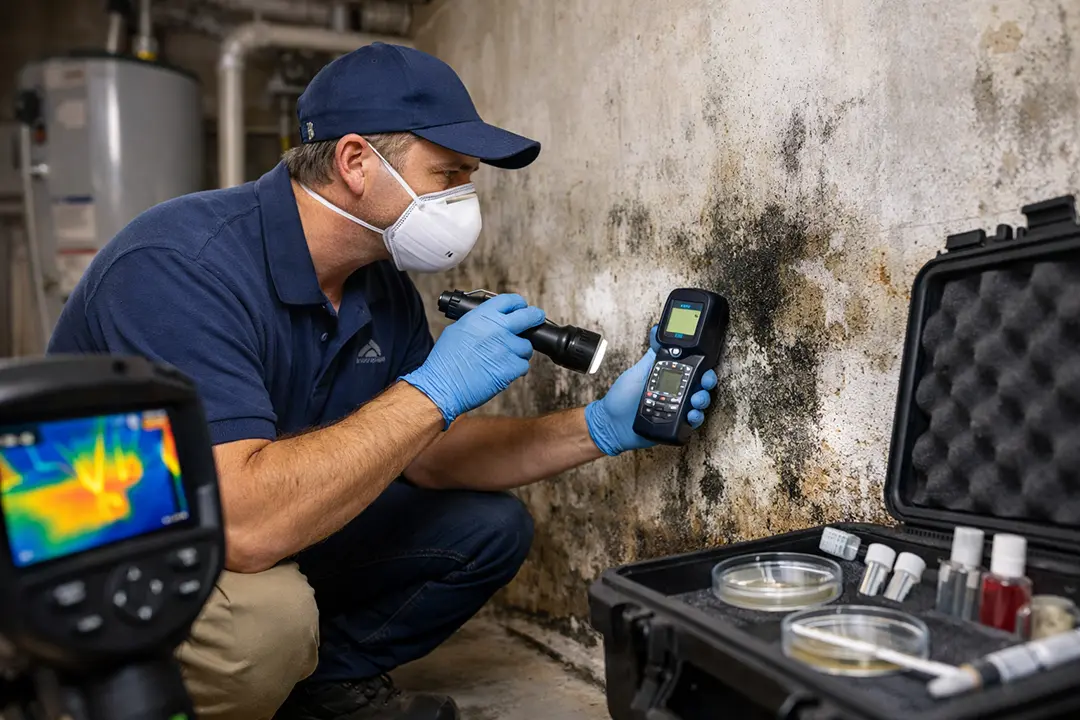
If you suspect mold in your home or business, a professional mold inspection is the best place to start. The process is designed to identify visible mold, hidden moisture, and the underlying conditions that may be allowing mold to grow. For homeowners and small business owners, the goal is not just to confirm whether mold is present, but to understand why it developed and what should happen next.
At Melbourne Mold, we take a thorough, investigative approach to every inspection. Mold is usually a symptom of a moisture problem, so our focus is on finding the source, evaluating the extent of the issue, and helping you make informed decisions about your property.
Why Mold Inspections Matter
Mold growth often begins after water intrusion, high humidity, or poor ventilation. Once moisture gets into building materials, mold can start spreading quickly if the source is not corrected.
For homeowners, this can affect indoor air quality, property value, and the condition of materials like drywall, insulation, flooring, and framing. For small business owners, mold can also disrupt operations, affect employee comfort, and create concerns for customers or tenants. A mold inspection gives you clear information before the problem becomes more serious.
The Inspection Starts With Questions
Every mold inspection begins with a conversation. The inspector will usually ask about the property’s history, including leaks, flooding, plumbing issues, roof damage, or any areas that smell musty or look discolored.
This first step helps narrow the focus of the inspection. If a homeowner says the bathroom ceiling has water stains, or a business owner reports a musty odor in a storage room, the inspector knows exactly where to pay closer attention. At Melbourne Mold, we use this information to build a clearer picture of what may be happening inside the property.
A Thorough Visual Walkthrough
The next step is a detailed visual inspection of the property. This includes looking at rooms and areas where moisture tends to collect, such as bathrooms, kitchens, laundry rooms, attics, crawl spaces, basements, closets, window frames, and around HVAC components.
During this walkthrough, the inspector looks for signs such as visible mold growth, water stains, warped materials, peeling paint, condensation, and any other evidence of moisture intrusion. In commercial properties, additional attention may be given to utility areas, storage rooms, break rooms, and mechanical spaces where hidden leaks often go unnoticed.
Moisture Detection Tools
Because mold needs moisture to grow, identifying damp materials is one of the most important parts of the inspection. Inspectors often use moisture meters to measure whether drywall, wood, or other materials contain elevated moisture levels. In some cases, thermal imaging may also be used to help detect hidden water behind walls or ceilings.
This part of the process is especially useful when the mold problem is not visible. Sometimes the damage is hidden behind cabinets, under flooring, or inside wall cavities. Moisture detection helps locate the source of the problem before more damage occurs.
Testing When Needed
In some cases, the inspector may recommend collecting air samples or surface samples. This is often done when mold is suspected but not clearly visible, when the type of mold needs to be identified, or when a more detailed indoor air assessment is needed.
These samples are typically sent to a laboratory for analysis. The results can help determine what types of mold spores are present and whether the indoor environment may have a contamination issue that requires remediation. Testing is not always necessary, but it can provide important evidence when the situation is unclear.
What The Report Includes
After the inspection, the client usually receives a written report that summarizes the findings. This report may include visible signs of mold, moisture readings, affected areas, sample results if testing was performed, and recommendations for next steps.
If mold is found, the report should also explain the likely moisture source and suggest whether repairs, further evaluation, or professional remediation may be needed. For homeowners, this report helps guide repair decisions. For business owners, it can support maintenance planning and provide documentation for property management or insurance-related discussions.
What Makes A Good Mold Inspection
A quality mold inspection should be more than a quick walkthrough. It should identify both the mold and the moisture problem behind it. That means looking at the whole property, asking the right questions, using proper tools, and explaining the findings in a way that is easy to understand.
At Melbourne Mold, we believe a good inspection should leave you with answers, not confusion. You should know what was found, what caused it, and what to do next.
When You Should Schedule One
You should schedule a mold inspection if you notice a persistent musty smell, visible mold, unexplained water damage, recent flooding, or recurring allergy-like symptoms indoors. It is also smart to schedule one after a roof leak, plumbing leak, storm damage, or any event that may have introduced excess moisture into the building.
For small business owners, it is especially important to act quickly if employees or customers have complained about odors, dampness, or indoor air quality. The sooner the problem is identified, the easier it is to address.
Frequently Asked Questions
How long does a mold inspection take?
The length of the inspection depends on the size of the property and the complexity of the issue. A small home may take less time than a larger commercial space or a property with hidden moisture concerns.
Do I have to leave during the inspection?
Usually not. In most cases, the inspector simply needs access to the areas being evaluated.
Does a mold inspection always include testing?
No. Testing is only recommended when it will help answer a specific question or clarify the extent of the issue.
What is the difference between mold inspection and mold remediation?
A mold inspection identifies the presence of mold and the source of moisture. Mold remediation is the process of removing the mold and addressing the affected materials.
Final Thoughts
A mold inspection is the first step toward understanding whether your property has a mold issue and what is causing it. By identifying both the visible signs and the hidden moisture behind them, a professional inspection helps homeowners and business owners make informed, confident decisions.
At Melbourne Mold, we focus on finding the source of the problem so you can move forward with a clear plan. If mold is present, the sooner it is identified, the easier it is to manage.
 Welcome to the Melbourne Mold website. If you have any questions regarding mold at your home or business premises - we are here to help. Please call or complete the form to the right, and we will be in touch at the earliest opportunity.
~ Greg Bertaux