
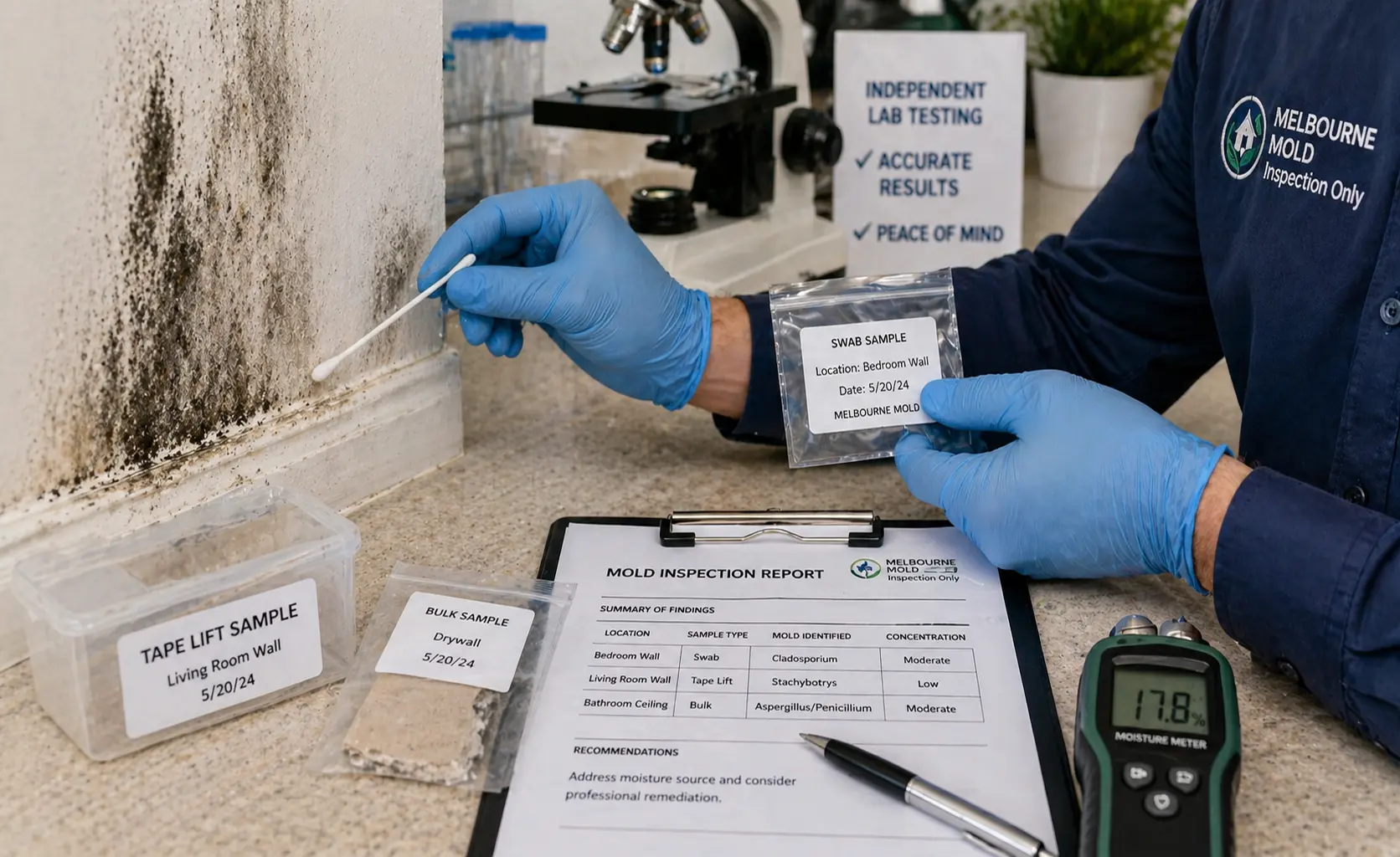
If you have spotted a suspicious stain on your wall, noticed a musty odor creeping through your building, or recently dealt with water damage, you may be wondering whether mold is hiding somewhere in your property. Surface sampling is one of the most reliable tools a professional mold inspector uses to answer that question with certainty. At Melbourne Mold, we work with homeowners and small business owners across south Florida every day, and we find that most people have never heard of surface sampling before they call us. This guide will walk you through exactly what it is, how it works, and why it matters for your health and your property.
Why Surface Sampling Matters
South Florida’s climate is one of the most mold-friendly environments in the country. High humidity, frequent rain, and warm temperatures year-round create ideal conditions for mold to grow on almost any organic surface. Drywall, wood framing, ceiling tiles, grout, and even paint can all serve as a food source for mold colonies.
The problem is that mold is not always visible. It can grow inside wall cavities, underneath flooring, behind baseboards, and in HVAC systems. Even when you can see discoloration, it is not always obvious whether you are looking at mold, mildew, dirt, or efflorescence. That is exactly where surface sampling comes in. Rather than guessing, a professional inspector collects a small physical sample from the area in question and sends it to an accredited laboratory for analysis. The results tell you not just whether mold is present, but what species are growing and in what concentrations.
This information matters for several reasons. Different mold species carry different health risks. Stachybotrys chartarum, commonly known as black mold, produces mycotoxins that can cause serious respiratory issues. Cladosporium and Aspergillus are far more common but can still be problematic for people with asthma, allergies, or compromised immune systems. Knowing exactly what you are dealing with helps you make informed decisions about remediation.
The Three Main Types of Mold Surface Sampling
Not all surface sampling is the same. There are three primary methods, and a qualified inspector will choose the right one based on the surface being tested, the type of contamination suspected, and the information the client needs.
Tape Lift Sampling
Tape lift sampling is the most common surface sampling method and is often the first choice when there is visible mold growth or staining. The inspector presses a piece of clear adhesive tape against the suspect surface, then lifts it away. This picks up any mold spores, fungal fragments, or hyphae present on that surface. The tape is then adhered to a glass slide or placed in a sealed container and sent to the laboratory.
This method is quick, non-destructive, and highly effective for identifying the types of mold present on a surface. It is particularly useful on painted walls, wood trim, bathroom tiles, ceiling tiles, and HVAC components. Because the sample is taken directly from a specific location, it gives the inspector very precise information about what is growing at that exact spot.
Swab Sampling
Swab sampling works similarly to tape lift sampling, but uses a sterile cotton or nylon swab instead of tape. The inspector wipes the swab across the suspect surface, collecting any biological material present. The swab is then sealed in a container and sent to the lab for analysis.
Swab sampling is particularly useful on irregular, porous, or textured surfaces where tape would not make full contact, such as rough concrete, brick, wood grain, or grout lines. It can also be used on surfaces that are too small or oddly shaped for a tape lift. One consideration with swab sampling is that the results are generally qualitative, meaning they tell you what types of mold are present, but are less precise when it comes to quantifying the concentration.
Bulk Sampling
Bulk sampling involves physically removing a small piece of the suspect material and sending it to the laboratory for analysis. This might mean cutting out a small section of drywall, removing a piece of ceiling tile, or collecting a portion of carpet or insulation. The lab then processes the entire piece of material, which allows technicians to identify mold growing not just on the surface but throughout the material itself.
Bulk sampling is the most invasive of the three methods, but it provides the most comprehensive information. It is particularly valuable when mold is suspected deep within a porous material, when a previous surface sample came back inconclusive, or when the inspector needs to determine whether a material has been thoroughly colonized and should be removed entirely rather than cleaned.
What Happens in the Laboratory
Once your samples arrive at the accredited laboratory, trained mycologists and laboratory technicians analyze them under microscopy. The process typically involves examining the sample to identify spore types, measure concentrations, and in some cases culture the sample to grow out any viable mold colonies for more precise species identification.
Most laboratories provide results within two to five business days, though rush services are often available. The lab report you receive will identify the genera or species of mold detected, the concentration or abundance of each type, and in some cases whether the cells observed appear to be viable or non-viable.
At Melbourne Mold, we work exclusively with accredited third-party laboratories that follow established industry standards. This independence is important: it means the lab analyzing your samples has no financial stake in the outcome of your inspection, and you can trust that the results are objective.
How Surface Sampling Fits Into a Full Mold Inspection
Surface sampling is a powerful tool, but it is most valuable when it is part of a comprehensive mold inspection rather than a standalone test. A qualified inspector does not just collect samples and wait for results. They conduct a thorough visual inspection of the property, assess moisture levels using calibrated meters, examine HVAC systems, look for signs of past or present water intrusion, and document their findings in detail.
Surface sampling results are interpreted in the context of everything else the inspector observes. For example, a tape lift from a wall that comes back positive for Stachybotrys is far more significant if the inspector also found elevated moisture behind that wall and evidence of a past roof leak. The sample result and the physical inspection findings together paint a complete picture of the contamination.
At Melbourne Mold, our inspectors are trained to look beyond the obvious. We check behind appliances, inside mechanical closets, around window seals, under sinks, and in crawl spaces. In south Florida, any location where moisture can accumulate is a potential mold site, and our goal is to identify every one of them before they become a larger problem.
When Should You Consider Surface Sampling?
Surface sampling is appropriate in a wide range of situations. You may want to consider scheduling an inspection and surface sampling if you notice any of the following.
You see visible staining on walls, ceilings, or floors that you cannot identify with certainty. You or your family members have been experiencing unexplained respiratory symptoms, headaches, or allergic reactions while inside the building. Your property recently experienced water damage from flooding, a roof leak, a burst pipe, or a malfunctioning appliance. You are purchasing a new home or commercial property and want confirmation that there is no existing mold problem. You completed a mold remediation project and want to verify that the work was effective. Your building has a persistent musty odor even after cleaning.
Business owners in south Florida face additional considerations. If employees are experiencing health complaints, if you operate in a regulated industry such as healthcare or food service, or if you are concerned about liability, documentation from a professional mold inspection with laboratory-verified surface sampling can be critical.
Understanding Your Results
When your laboratory report comes back, the results can seem technical if you are not familiar with fungal biology. That is why Melbourne Mold provides every client with a detailed written report that translates the laboratory findings into plain language and concrete recommendations.
A key concept to understand is that some mold is present in virtually every indoor environment. The goal of surface sampling is not to find zero mold, but to determine whether the types and concentrations present are consistent with what would be expected for a normal, healthy indoor environment, or whether they indicate active colonization that requires remediation.
Indoor surface samples are typically compared to outdoor baseline samples collected during the same inspection. If a particular mold type is found in much higher concentrations indoors than outdoors, or if a mold species that is rare in the outdoor environment is found indoors in significant quantities, that is a strong indicator of an indoor moisture problem driving mold growth.
The Melbourne Mold Difference
At Melbourne Mold, we believe that every property owner deserves honest, accurate information. Our inspectors are certified, experienced, and committed to giving you results you can act on. We serve homeowners, landlords, property managers, and small business owners throughout the Melbourne area and across south Florida.
We do not perform remediation. This is a deliberate choice, and it is important. Because we are an inspection-only company, we have no financial incentive to find a problem that is not there or to exaggerate the severity of one that is. Our only interest is giving you the truth about your property.
If you have questions about mold surface sampling, suspect a mold problem in your home or business, or simply want peace of mind after water damage, we encourage you to give us a call. A professional mold inspection with surface sampling is one of the most valuable investments you can make in the health and safety of your property.
 Welcome to the Melbourne Mold website. If you have any questions regarding mold at your home or business premises - we are here to help. Please call or complete the form to the right, and we will be in touch at the earliest opportunity.
~ Greg Bertaux